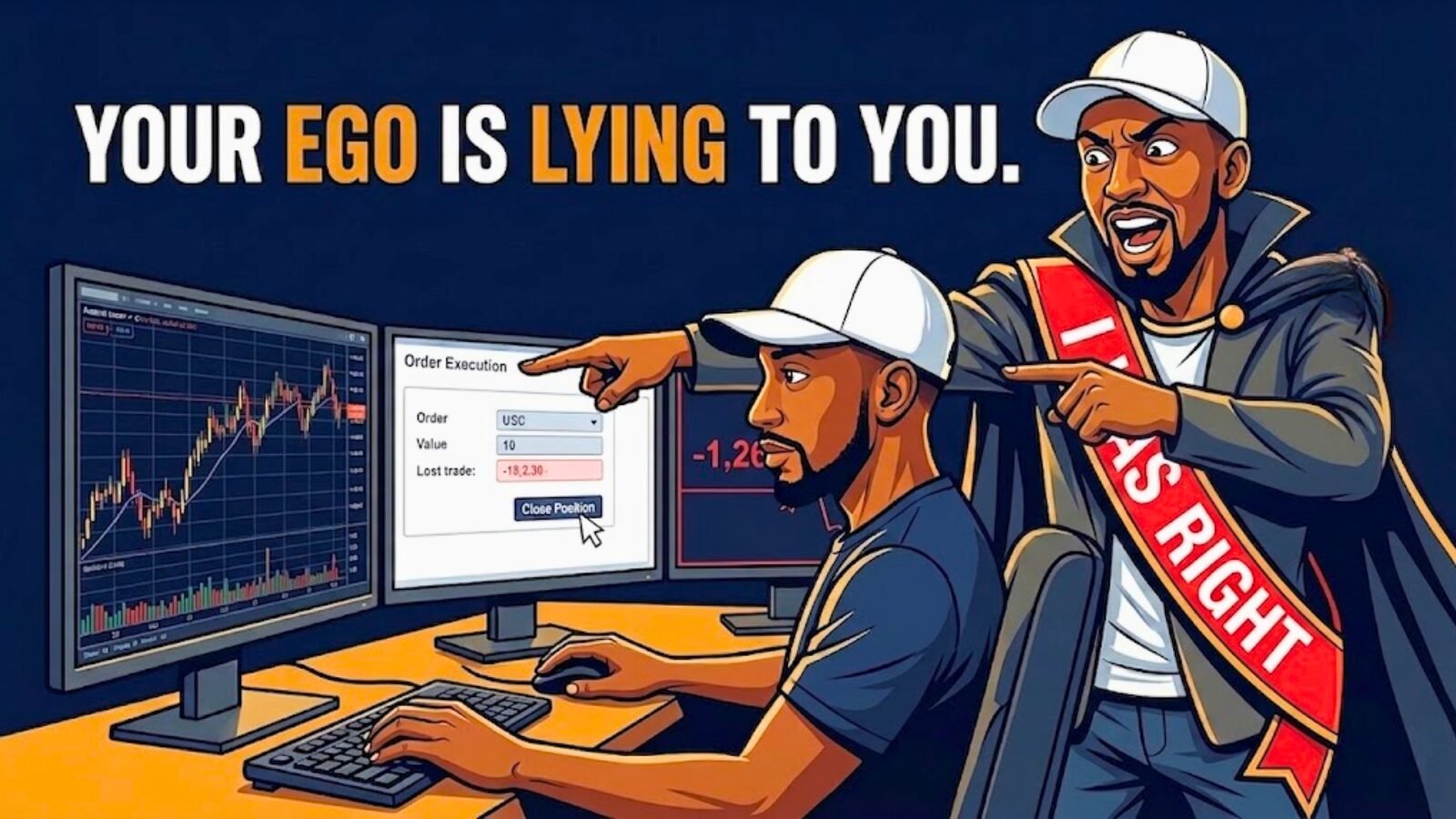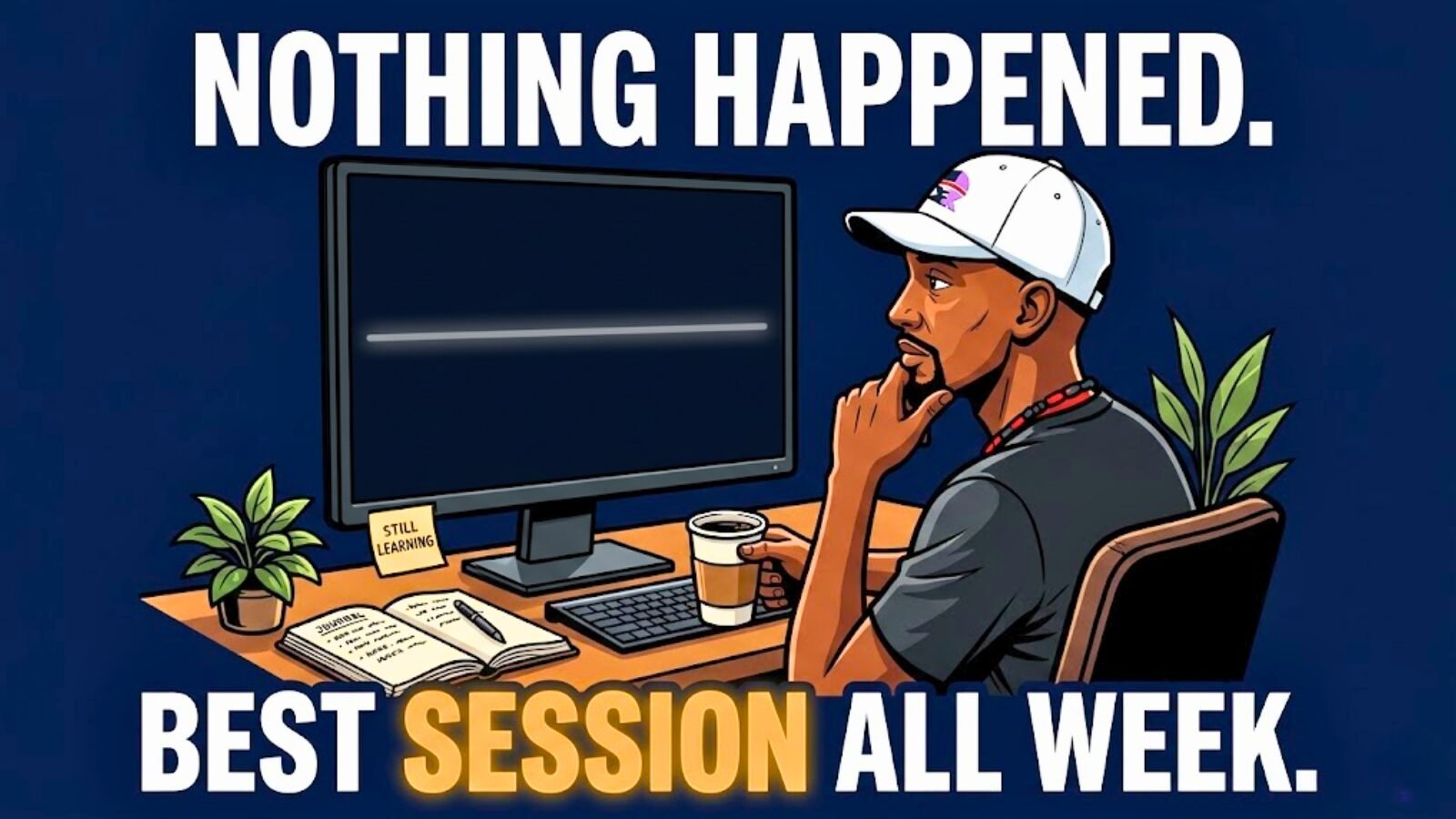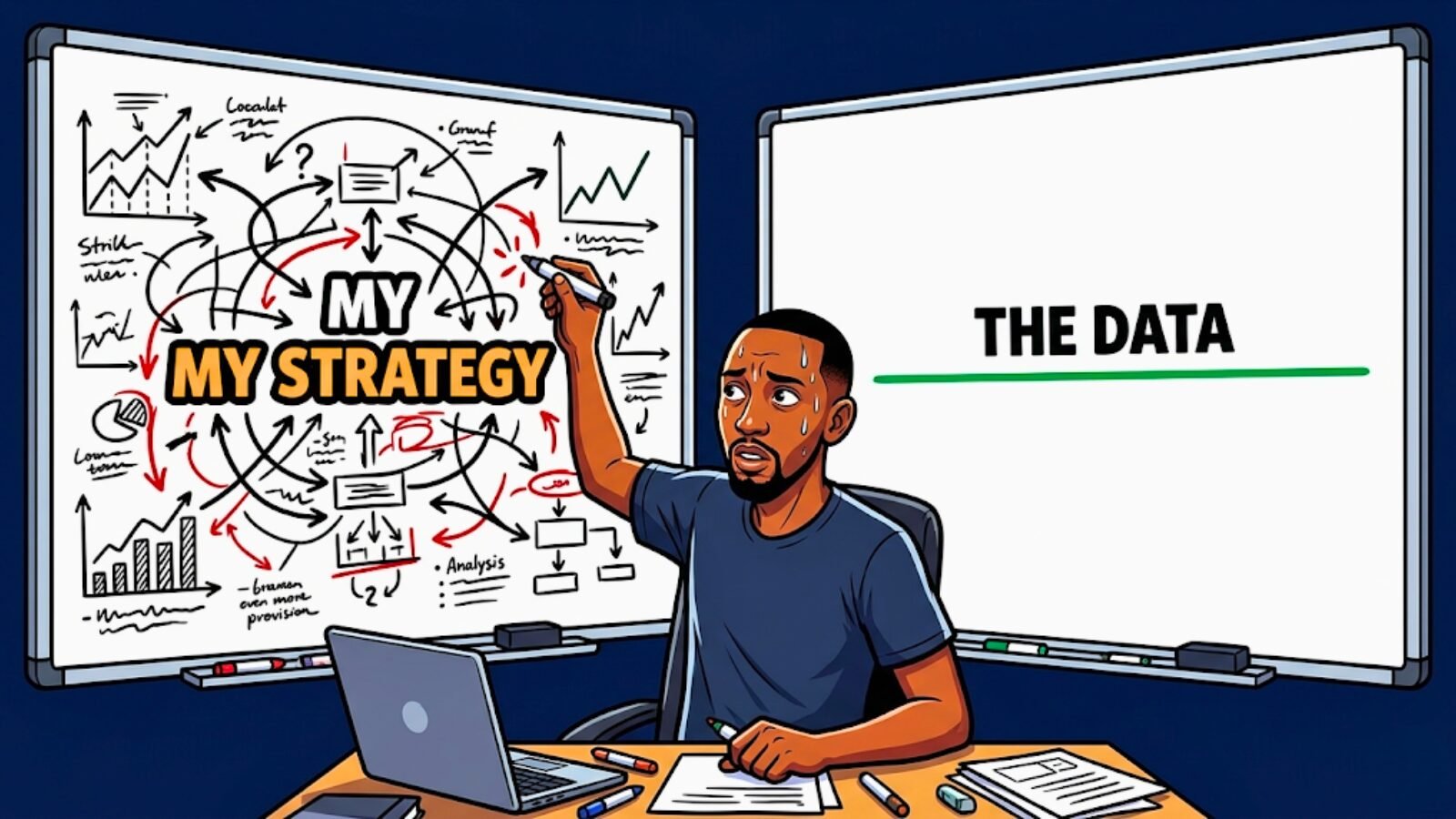
Split-panel meme illustration showing a calm trader sipping coffee with a green checkmark labeled "Followed the Plan" next to a chaotic trader drawing all over their chart labeled "Forced It," representing the discipline of sticking to your trading system when market conditions don't cooperate.

What Should You Do When the Market Doesn’t Match Your Strategy?

Trading is risky! Past performance does not guarantee future results. Click here to read our full Disclaimer

The market does not owe anyone a setup.

That is one of those things that sounds simple but takes real experience to actually internalize. There are sessions where everything lines up. The conditions match the system, the triggers appear, and the plan gets executed cleanly. And then there are sessions like this one, where the market does its own thing, the environment works against the approach being used, and the honest result of the day is a small win that barely moves the needle.

That kind of session is not a failure. In fact, handled correctly, it might be one of the more important kinds of sessions a trader can have.

Not Every Session Is Built for Every System

Markets cycle through different states. They trend, consolidate, and spike on news. They grind in tight ranges on low volume. No single approach is designed to thrive in every one of those environments, and the traders who understand that have a massive psychological advantage over the ones who do not.

This session was a clear example. The market had been pushing into new all-time highs repeatedly on relatively low volume, holding in a narrow range at previous session highs. That kind of environment limits the number of opportunities a system like the one being run here is designed to capitalize on. The triggers were limited. The setup count was low. That is not the system failing. That is the system working exactly as designed, not generating signals when the right conditions are not there.

The distinction matters more than most traders give it credit for. A system not triggering is not the same as a system not working.

All Strategies Work, Just Not All the Time

There is a quote that has taken on more meaning over time through firsthand experience developing multiple approaches: all strategies work, just not all the time.

The truth behind it is not immediately obvious when first heard. It sounds like an excuse, like something a losing trader says to avoid accountability. But after years of building, testing, and refining multiple strategies, the depth of it becomes clear.

Every strategy is built around a set of conditions. When those conditions are present, the strategy performs. When they are not, adds to drawdown or it sits out. The mistake most traders make is judging the strategy by the sessions where the conditions were absent, ignoring the ones where the perfect conditions were present.

Building a strategy from scratch, rather than borrowing someone else’s approach, is what makes this understanding real. When the logic behind every rule is understood because it was developed and tested personally, there is no confusion about why a quiet session happened. The reasoning is baked in. The strategy is not broken. The environment just did not cooperate today.

That kind of clarity is only available to the trader who did the work to build their own system.

Following the Plan When There Is Nothing to Work With

Here is where a lot of traders lose the session even before a single trade is placed.

When conditions are slow and setups are not forming the way the system expects, the temptation is to start improvising. Widen the criteria. Take a trade that is close enough. Do something to justify being there.

That is exactly the wrong response, and it tends to be driven more by boredom and frustration than by any actual read on the market.

Keeping your plan as the primary emotional focus redirects that energy. Instead of trying to force the market to cooperate, the plan becomes the anchor. Is there a trigger or is there not? If not, wait. If there is, execute. The emotional noise that comes from trying to make something happen gets replaced by the mental clarity of following a rule-based process.

This session produced a small positive result. One position, taken when the trigger appeared, executed at the appropriate level. That is a win. Not because of the size of the result, but because of the accuracy of the execution. The plan was followed in conditions that could have easily led to overtrading or frustration-based decisions.

Trading accurately is not the same as trading profitably in every session. But it is the foundation that eventually produces consistent results over time. That distinction is one of the most important things a developing trader can absorb.

The Trap of Seeking External Validation

One thing that comes up consistently in conversations with traders who are stuck is the habit of looking outward for confirmation of what they already know inwardly.

A pattern is recognized that the trader sees as an opportunity for developing or improving a system. And instead of following that instinct, there is a search for someone else to agree. A chat room, a Twitter feed, a Discord channel, a YouTube stream running in the background. Something external that says “yes, this is the right call.”

That habit is expensive in more ways than one. The time spent seeking confirmation is time not spent executing. And over time, it trains the brain to distrust its own process, which is exactly the opposite of what needs to happen for a trader to develop genuine confidence.

Leaning into what organically draws attention as a trader, building around it, testing it, and developing it into a real system, is the alternative. When the system comes from personal interest and personal effort, the confidence to act on it is built into the foundation. It does not need external approval because the work behind it is already understood.

Confidence in reading the market and executing on that read is not optional for anyone trying to make this sustainable. It has to be developed, and it can only be developed by doing the work and trusting the output of that work.

This is a theme that runs through Pull the Trigger: How to Stop Missing the Trades That Pay as well. The psychology behind hesitation is almost always rooted in a distrust of one’s own process. The fix is not more information from outside. It is more confidence built from within.

Passion Shows Up Before the Results Do

Nine and a half years of trading. Only two of those years were profitable in a meaningful way: 2024 and 2025.

That timeline is worth sitting with for a moment.

Most people would have stopped long before reaching year nine. The question that naturally follows is why keep going through the unprofitable years. And the honest answer is that the passion was never tied to the money. Trading is the only thing that consistently generates the motivation for me to be up early every morning without needing an external push. It does not feel like discipline. It just feels like where the energy naturally goes.

That is what real interest in something looks like. Not the social media version of passion, where every day is exciting and the results are always good. The actual version: showing up consistently over years, through private, solo-sessions that produce nothing, through stretches that feel like they will never turn around, because the process itself holds enough interest to stay in it.

That kind of engagement with a craft is also what leads to the deepest level of skill. Not the trader who finds the shortcut and cashes out in year two, but the one who is still here in year ten with a decade of real data, real experience, and a system built from scratch that reflects everything learned along the way.

The passion is in the daily activity. Not in the result of the day.

Sponsored Zoi Teli'a
Feel your best. Trade your best. Your mindset is your edge. It starts with how you feel.
Shop Now →

Healthy Detachment Is Part of the Process Too

One thing worth mentioning because it does not come up enough: a healthy relationship with trading includes fully stepping away from it.

Weekends are weekends. Holidays are holidays. There is no yearning to get back to the markets on a Saturday morning. No checking charts during family time. The boundaries are real.

That kind of detachment is not a sign of low commitment. It is a sign of sustainability. Traders who cannot turn it off are carrying the market home with them, and that weight accumulates in ways that eventually affect the quality of the execution. Rest and recovery are key contributors to performance.

The goal is to show up fully on trading days and fully disengage when trading is done. That rhythm, maintained over time, is part of what makes the long game possible.

When the Market Does Not Cooperate, How You Trade Is the Result

On the days when the conditions do not cooperate, the performance measure shifts.

It is no longer about what the account gained or lost. It is about whether the plan was followed. Whether the system was respected. Whether the session produced accurate execution, even if it produced minimal results.

This session was a green day on a low-opportunity day in conditions that were not designed to produce much. The position taken was taken correctly. No other trades were forced, or fabricated, in real-time beyond the rules of the system. That is how the business remains operational, indefinitely.

The long-term edge is built exactly in sessions like this one. Not by finding a way to manufacture trades that were never there, but by maintaining the discipline to operate within the plan when operating outside of it would have been easy to justify.

Trade it easy āœŒšŸ¾

Meme illustration of a defeated trader hovering over a red "Skip This Trade" button while a confident ghost version of themselves points urgently at a sticky note reading "Follow the Plan," representing the cost of trigger shyness during a drawdown.

Why the Plan Is the Only Thing That Matters in a Drawdown

Trading is risky! Past performance does not guarantee future results. Click here to read our full Disclaimer

There is a question that comes up over and over in trading, especially during rough stretches: how do you stay consistent with a strategy when it is not working?

It is one of the most important questions a trader can ask. And the answer is both simpler than most people expect and harder than most people want to hear.

This session was a good example of what that looks like in real time. The market was volatile, the overnight range was wide, and things did not go smoothly out of the gate. The position resulted in an expense initially, and then a decision had to be made: pull back, or follow the plan and take the next trigger.

The plan was followed. The second trigger moved toward profit. The session closed in the green.

That sequence only happened because the trigger was pulled. And that is the whole point.

Drawdown Does Not Break Strategies. Trigger Shyness Does

When a strategy goes through a rough patch, the natural instinct is to pull back. Take fewer trades and be more selective. Wait for the “perfect” setup before committing again.

That instinct feels protective. It feels disciplined, but what it actually does is take all the downside of the losing period while cutting off access to the upside that eventually follows.

Losses are going to happen. That is not optional. What is optional is whether a trader is still in the game when the setup that recovers the day shows up. If trigger shyness has taken over, that moment comes and goes without participation. The loss stays on the books and the recovery never lands.

Getting all the downside without any of the upside is not risk management. It is the worst of both worlds.

The Trigger-Shy Spiral

Here is how the spiral usually works.

A trade loses. It hurts a little. The next valid signal appears and there is hesitation. The trade is skipped. That trade also loses. Now the hesitation feels justified. “Good thing I sat that one out.”

Then the next signal appears. Hesitation again. This trade would have won. Now there is regret. The next signal appears and there is pressure to make up for the missed winner. The trade is taken but for the wrong reasons, under emotional pressure instead of plan-based logic. That one loses too.

None of this is a strategy problem. It is entirely a psychology problem that compounds fast.

The habit being built during this spiral is the habit of not pulling the trigger. That habit does not stay in the losing periods. It carries over into the winning ones. When the strategy starts performing again, the same hesitation shows up because it was reinforced over and over during the drawdown. The muscle was trained in the wrong direction.

This is something I spent a lot of time writing through in Pull the Trigger: How to Stop Missing the Trades That Pay. The fear that builds during a losing stretch does not automatically go away when the results improve. It has to be actively addressed. And the way to address it is to keep executing, especially when it is uncomfortable.

The Only Way to Overtrade

Overtrading gets talked about a lot. Most of the time it gets framed as taking too many trades or trading too frequently. The real definition is simpler than that.

The only way to overtrade is to trade outside the plan.

If the plan says take this signal and the signal appears, taking the trade is not overtrading. It is executing the plan that was developed through real work. If the plan does not include a signal and a trade gets taken anyway, that is overtrading, regardless of how convincing the setup looked in the moment. Regardless if it was the 2nd trade or the 20th trade.

Everything comes back to the plan. Consistency comes from the plan. Discipline is measured against the plan. Results, over a large enough sample size, reflect the plan. Without the plan as the anchor, every decision becomes a judgment call made under pressure, which is exactly the environment where bad habits form fastest.

There is a version of trading advice circulating online that says to be picky with entries. Wait for the A-plus setups. Skip the ones that do not feel right.

That advice is not universally wrong, but it is generally missing critical context. Being selective is a skill that has to be earned through a deep understanding of a specific strategy. Applied without that foundation, it gives emotional hesitation a legitimate-sounding excuse. “I was being selective” and “I froze and did not take the trade” can look identical from the outside.

The 95% Rule (Opinion)

Before any adjustment to a strategy makes sense, there is a prerequisite that has to be met: the plan needs to be followed with at least 95% accuracy over a meaningful sample of sessions.

That number is a personal standard, not an industry benchmark. But the logic behind it is solid. A plan that is not being executed consistently cannot produce reliable data. The results are contaminated by the inconsistent execution. It is impossible to know whether the strategy needs work or whether the execution does, because both variables are moving at the same time.

This is one of the most under-appreciated ideas in trading. Most traders who think their strategy is broken have never actually traded it cleanly enough to know for sure. They have been running a version of it filtered through hesitation, selective application, and emotional override. The strategy never got a fair test.

Clean up the execution first. Follow the plan with 95% accuracy over enough sessions to generate real data. Then look at the results and evaluate. At that point, the conversation about adjustments is grounded in actual evidence instead of feelings from a rough week.

Once that execution consistency is proven, then the door opens to evaluate whether the strategy needs refinement for the current environment. Not before.

What Drawdown Actually Gives You

Difficult periods in trading are underrated as a training tool.

When the market is choppy, when the results are not there, when every session feels like a grind, that is exactly when the most important skill is being developed. Not finding winners. Not reading price action better. The skill of maintaining the habit of pulling the trigger when the plan says to, regardless of how the last trade went.

That skill, built during the hard sessions, is what makes consistency possible when things get easier. The trader who keeps executing through a drawdown is training long-term profitable habits. The trader who pulls back is training habits that lead to frustration and mistakes.

This session was a small but clear example of that. After an initial expense, the plan called for taking the next valid signal. That trigger was pulled and moved toward profit. If hesitation had taken over after the first loss, that second trigger would have been missed. The session would have closed in the red instead of the green, not because the strategy failed, but because the execution did.

Sponsored Zoi Teli'a
Feel your best. Trade your best. Your mindset is your edge. It starts with how you feel.
Shop Now →

Making the Market Make Sense to You

One thing that helps with staying logical during volatile or choppy sessions is building a personal language around what the market is doing.

Traditional candlestick pattern names and indicator labels work for some traders. For others, translating market behavior into familiar terms from other areas of life, business, marketing, sports, whatever is deeply understood, reduces the emotional noise that comes from trying to interpret something that feels foreign under pressure.

This is not a gimmick. It is a practical psychological tool. When the market is doing something that can be connected to a concept that is already understood, the emotional charge around it drops. The decision-making becomes cleaner. The plan is easier to follow because the situation feels familiar instead of threatening.

Building that personal framework takes time. But it is worth it. Making the market make sense on your own terms is a real form of psychological edge.

The Plan Is the Way Through

Drawdowns end. Rough patches pass. But the habits built during those periods carry forward regardless of which direction the results go.

The trader who keeps following the plan through a difficult stretch comes out the other side with stronger execution habits, cleaner data, and a more grounded relationship with the strategy. The trader who pulls back comes out of it with a confirmation bias problem and a hesitation habit that will cost them trades even when the market cooperates.

The only way out of a drawdown is through it, with the plan intact.

For traders working through the mental side of staying consistent under pressure, Pull the Trigger: How to Stop Missing the Trades That Pay is the resource I built specifically around that challenge. The psychology behind why the trigger does not get pulled, and what to do about it.

Trade it easy āœŒšŸ¾

Meme illustration of a trader proudly pointing at one sticky note labeled "Entry" on a massive empty whiteboard, while two other sections labeled "Position Management" and "Manage Yourself" sit completely blank and dusty behind him, representing the Strategy Development Trifecta concept.

Why Most Traders Only Work on Half of What Actually Matters

Trading is risky! Past performance does not guarantee future results. Click here to read our full Disclaimer

There is a common belief in trading that goes something like this: if the results are not there, something must be wrong with the indicators. Or the entries. Or the exits. Fix the chart, fix the trader.

That belief is only part of the picture. And in most cases, it is not even the most important part.

This session happened to be a no-trade day. The broker increased margin requirements ahead of an FOMC afternoon, and the rule is simple: when margin goes up, trading stops. No exceptions, no second-guessing, no trying to find a workaround because the morning session looked fine. The rule exists so those decisions do not have to be made in real time under pressure.

But what a no-trade day creates, if it is used well, is something most active trading sessions cannot provide: uninterrupted time to think, research, and work on the parts of the business that usually get pushed aside. This particular session turned into one of the more productive conversations around strategy development in a while. Specifically, a framework started to take shape that I’m calling the Strategy Development Trifecta (a cousin to The Perfect Strategy Trifecta).

The No-Trade Day as a Hidden Tool

The instinct when trading stops is to feel like a day is being lost. There are no actions to take. The market is moving and participation is on the sideline.

That feeling is worth examining, because it is usually not accurate.

No-trade days, when your rules create them, are not wasted days. They are investment days. Research gets done. Ideas get tested. The task list that never gets touched during active sessions finally gets some attention. All of that happens without the mental load of managing open positions.

One thing to be careful about, though: observations made during a no-trade day should not automatically be used to adjust an active strategy. If there is no plan to trade those specific conditions going forward, then what happens during a no-trade day is interesting data, not actionable data. Keeping that distinction clear matters.

The Strategy Development Trifecta

Most traders build one-third of a trading system and call it complete.

They have a setup. They know what to look for. They have studied their entries and their exits. That is real work and it counts. But it is only one piece of what a fully developed approach actually requires.

Here is the framework that came into focus during this session. A complete strategy development process has three components:

1. Preparation to Execute

This is the part most traders work on. Defining the signal. Knowing the trigger. Building the pre-session routine that puts the mind and the platform in the right state to recognize opportunities when they form. This is where most of the study time goes, and rightfully so. But it is not enough on its own.

2. Management of the Position

Once a trade is on, a new set of decisions begins. When to stay. When to step away. What the exit criteria look like and how systematic adjustments get made while holding. Traders who have not built this out clearly are left making it up in real time, which is exactly when emotional interference tends to peak.

3. Management of Self

This is the piece that almost always gets left out. Mindset. Emotional state going into the session. Post-session routines. Physical health. Rest. All of it.

Most traders treat self-management as something separate from trading, like it is a lifestyle choice that has nothing to do with what happens on the charts. Experience says otherwise.

Emotions Cannot Be Removed. They Can Be Redirected

There is a version of trading advice that tells traders to remove emotion completely. Become a machine. Feel nothing.

That is not realistic, and chasing it tends to create more problems than it solves.

Emotions are not going away. The question is where they are being directed. When emotional energy gets tied to monetary outcomes, specifically to the P&L number updating in real time, that is when interference shows up. It shows up as closing a position too early because it hurts to watch. It shows up as holding too long because walking away from a loser feels like admitting something. It even shows up in fully automated systems, where traders who swore they would never interfere end up overriding or tweaking their own automation after a drawdown.

The shift that actually works for most is redirecting that emotional energy toward what is within control. Position sizing. Risk parameters. Hold duration. The execution of the plan. Those are things a trader can control. The monetary outcome of a filled order is not, and trying to control it emotionally creates friction that costs more over time than the original discomfort ever would have.

This is something I wrote about at length in Pull the Trigger: How to Stop Missing the Trades That Pay. Moving the pain away from the P&L and toward the accuracy of execution changes the entire emotional relationship with trading. When missing a trade hurts more than losing on one, the motivation to follow the plan gets a lot stronger.

Physical Health Is Part of the Trading System

This came up in a real way during this session, and it is something that deserves more attention than the trading community usually gives it.

There is a direct connection between physical condition and mental performance. That is not a soft claim. It shows up in how long focus can be sustained during a session, how quickly the mind resets after a loss, how steady the emotional baseline is when volatility spikes.

The traders who have neglected this and experienced a health crisis mid-career know how fast things can unravel. A trading system that was working, with statistics to back it up, can become nearly unusable when the body is not operating well. Not because the system changed, but because the person running it is compromised.

Starting self-care early in a trading career is not a luxury. It is a compounding investment in performance. Every session benefits from it, even if the connection is not obvious in the moment.

This means treating physical health as part of the trading process, not as something that happens after trading is figured out. Fitness, sleep, nutrition, stress management. These are not separate from the system. They are the foundation the system runs on.

Tools That Support the Process Without Adding to the Load

One of the ongoing challenges for a trader who also creates content is building a workflow that serves both without one of them suffering.

Session recordings are valuable on both sides. For the trader, they serve as game film. For the audience, they provide a transparent look at a real trading process. But editing raw session footage is a significant time commitment, and the tools have to be right.

During this session, some time went into exploring Descript’s Creator package for handling both trading session recordings and other video content. Their features for automating social media clips is worth testing. YouTube Studio’s native editing tools were also evaluated and found to be too limited for what detailed session content actually requires.

The principle here is straightforward. Any tool added to the workflow has to earn its place. If it adds more friction than it removes, it is not the right tool yet. The goal is to find setups that serve both the trading process and the content pipeline without creating new problems to manage.

Sponsored Zoi Teli'a
Feel your best. Trade your best. Your mindset is your edge. It starts with how you feel.
Shop Now →

The Whole System, Not Just the Chart

A trading system is not just what happens on the screen. It is also how a trader prepares before the session, how positions get managed while they are open, and how the person sitting at the desk is taking care of themselves day to day.

Most of the energy in trading education goes to the first third. The setup → The signal → The entry → The financial outcome. That is important, but it is not complete.

No-trade days are a reminder that the business of trading involves a lot more than the trades themselves. Research gets done. Frameworks get refined. The self-management piece gets the attention it usually does not get during active sessions.

The trader who puts real work into all three components of the trifecta, preparation, position management, and self-management, is building something that holds up over time. The one who only works on signals and exits is building something fragile, and will likely not understand why when it starts to break down.

Trade it easy āœŒšŸ¾