Trading is risky! Past performance does not guarantee future results. Click here to read our full Disclaimer

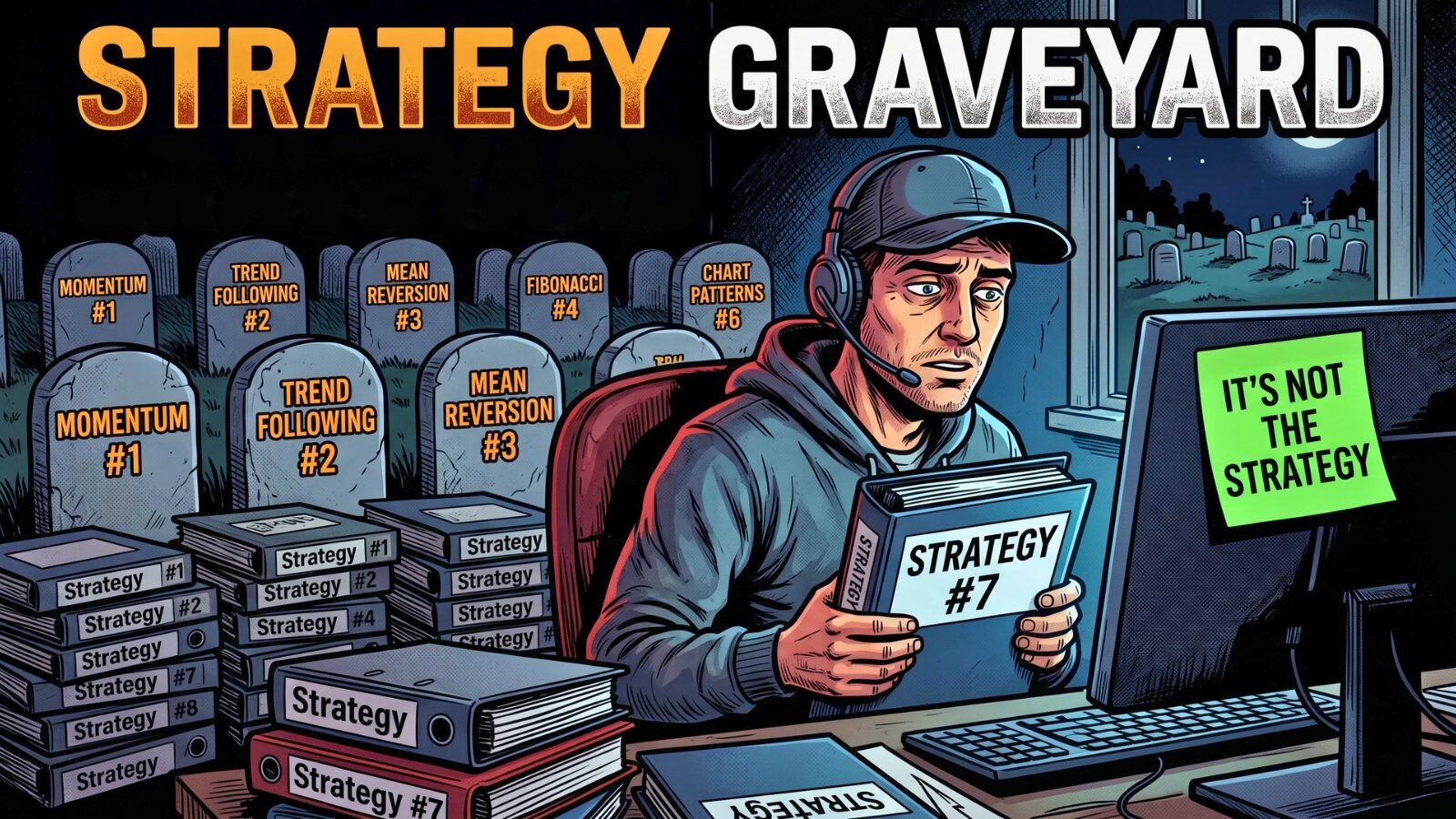
Three days in a row without a tradable trigger.
The market moved. There was a news event. A vol spike hit at the B-period transition. Price covered a meaningful range across the session. And not one single setup met the criteria from open to close.
That is the perfect conditions to queue feelings of frustration. Acknowledging that openly matters because the trading content space tends to skip over this part. The polished version of the story is all discipline and calm detachment. The real version includes sitting at the desk watching the market do things that look like they should produce a trigger and feeling the pull to do something about it.
The discipline was to do nothing. And that is what this session was about.
Why Does the Market Move Without Giving a Valid Trade?
This is one of the more disorienting experiences in trading, especially for developing traders, and it deserves a direct explanation.
Market movement and tradable conditions are not the same thing. Price can cover significant range, produce visible momentum, spike on a news release, and show up on the chart as an active session without ever generating a single setup that meets a specific strategy’s entry criteria. Those two things operate independently of each other.
This session was a clean example of that. The overnight range was nearly flat, just a 0.01% change with NQ swinging below the previous session low into roughly a 50% retrace of the prior range before RTH began. The premarket picture was advertising a failed rotation attempt away from the ATH zone. Going into the open, the conditions looked like they could develop into something.
And they did, but just not in a way that triggered a legitimate action per the plan.
For extended periods throughout the morning, price sat in what my system refers to as purgatory: budgeting within a range of interest without committing to any clear direction. Sitting in that zone is not tradable under the current system’s rules, and trading into it anyway would have been a forced entry with no legitimate basis in the plan.
The vol spike that eventually came around 12 minutes into the B-period window pushed through the opening range and the overnight halfway point. Home Sales had been scheduled at the B-period transition, but whether that event was the driver of the move or something else entirely drew participant interest at that moment is not something that can be stated with any certainty from the session data alone. What is clear is that the spike came after the fact, with no setup meeting entry criteria beforehand. Watching it happen without participation stings a little. It is still the right outcome.
A strategy not generating triggers in certain conditions is not a broken strategy. It is a strategy with parameters.
What Should You Do When a Setup Looks Right but Prints Differently?
One potential setup appeared during the session that deserves its own treatment because it came close enough to qualifying for an updated to the strategy.
The setup printed in a slightly different way than the standard version. Not unrecognizable, but different enough that there was a genuine question about whether it could count towards activating an untradable trigger in the future (not today). The internal debate lasted about three seconds before the answer became clear: more work is needed before making it official criteria for a tradable setup.
This is the validation process that every new or modified pattern observation has to go through before it earns real capital. The sequence is:
- Watch it form in real time
- Take notes on what made it different
- Backtest it for a historical footprint
- Decide based on that evidence whether it becomes actionable
The setup got documented for later review and backtesting. That is all it earned at this stage. Not a live trade, not even a mental note to watch for it next time without the documentation work behind it. The note goes into the journal. The backtesting goes on the task list.
Setups that print in slightly different ways are still worth documenting. Some of them develop into legitimate new variations of existing criteria once the historical data backs them up. Some of them turn out to be one-off occurrences that never repeat with enough frequency to be trustworthy. The only way to know which is which is to do the work, and the work starts with the observation being captured clearly rather than half-remembered.
Discretionary situations require a validation period first. That is the rule, and today was a clean example of it holding.

Value Is Subjective, Even When Clearly Identified on a Chart
The session note going into this morning was short and worth sitting with: “Value is subjective, even where clearly identified on a chart.”
This is not a new realization. It has been part of the mental framework for a long time, even before it could be articulated clearly. But it surfaces in a specific and useful way in trading that is worth addressing directly.
Two traders can look at the same chart, identify the same value area, and walk away with completely different reads on what it means for the next move. Neither of them is necessarily wrong. They are applying their own experience, their own system design, and their own belief framework to the same information and arriving at different conclusions. That is not a problem to be solved. That is just how interpretation works.
The more interesting pattern is what happens when someone recognizes value in something and assumes that value should apply universally. “This is what I see, therefore this is what everyone should see.” That belief framework is the engine behind most of the debates playing out in trading communities across the internet every single day. Heated, circular, defensive debates where both sides are arguing from a place of genuine conviction and neither side is fully wrong (nor right).
What keeps those debates alive is the implicit threat that acknowledging the subjectiveness of value would end the need to debate. If both parties accepted that their truth is their truth and the other person’s truth is their truth, and that both can coexist without one invalidating the other, the argument becomes pointless. There is nothing left to protect. But protecting the belief that “my truth is THE truth” feels necessary because the alternative feels the same as a losing trade.
In trading this plays out quietly and expensively. A trader who cannot accept that another valid approach exists alongside their own is a trader who will spend energy defending a position rather than refining one. And a trader who cannot accept that their own read on value is personal rather than universal will always be looking outward for confirmation instead of inward for conviction.
This connects directly to what’s covered in Pull the Trigger: How to Stop Missing the Trades That Pay. The habit of seeking external validation for a trade, waiting for someone else to agree with the read before pulling the trigger, is rooted in exactly this: the belief that value needs to be universally confirmed to be real. It does not. The read built from a personal, documented, tested system is enough. Two people seeing the same chart differently does not make either one wrong or right. It makes both of them human beings making use of their ability to observe and think.
Why Documentation Is Worth the Extra Few Minutes Every Single Time
The reinforcement around documentation that came up in today’s session ties directly back to the personal cost of not doing it consistently as a new trader.
My first month of futures trading produced results worth documenting in detail. They were not documented in detail. When the focus shifted and the approach changed, what had been working quietly disappeared into memory rather than into a system that could be revisited and rebuilt from. The knowledge was there once. It did not survive the transition.
That experience created a permanent rule: document everything, even the data that is not being actively used right now. Especially the latter. The reason for continuing to collect information on patterns and setups that are not part of the current active plan is straightforward. If that territory gets revisited later, the historical record is already there. Without it, the observation work has to be done all over again from the beginning.
A strategy that is not documented is a strategy that is slowly being forgotten. And forgotten strategies cannot be recovered cleanly, only rebuilt from scratch with whatever memory survived.
A few extra minutes of documentation at the end of a session is a compounding investment. It does not feel significant in the moment. Over years, it is one of the highest-return habits in the entire trading operation.
When the Tools Start Slowing Down
The charts froze multiple times near the end of the trading window today. Not for the first time. This has been happening with increasing frequency as the session workload, including active charts, screen recording, and streaming simultaneously, pushes up against the limits of an aging machine.
A trading operation that is running into hardware limitations is a trading operation that is introducing an avoidable variable into the execution environment. Freezing charts during the B-period transition, when the market is most likely to produce actionable movement, is not a minor inconvenience. It is a focus drain that adds stress to exactly the moments that require the clearest attention.
The PC upgrade has been on the task list for some time now. Today moved it even higher. The parts are already mapped out. The investment is straightforward: a more capable machine removes a recurring source of friction that should not exist in the first place.
Tools should serve the process. When they start working against it, the priority shifts. The upgrade is not a luxury. It is maintenance on a live operation that depends on reliable equipment to function properly.
The Discipline of Not Trading Is Still Discipline
Three sessions. Zero trades. Zero unnecessary expenses. Full engagement with the process each day.
The frustration of watching the market produce movement without generating a single valid trigger is a real psychological cost. Acknowledging that honestly is more useful than pretending it does not exist. The pull to do something, to participate in a session that clearly had active conditions, is real and it is always there.
The discipline to stay out when the plan says there is nothing to take is not passivity. It is the plan working exactly as designed. A rule-based system that keeps a trader out of marginal setups is doing its job, even when the marginal setups happen to move in the anticipated direction. Staying out of them consistently is how the statistical foundation of the strategy stays clean.
The session produced real value despite the empty trade log. A new pattern variation was observed and documented for backtesting. The validation rule held under real pressure. The subjectivity of value got examined in the context of how failing to realize this reality can stagnate your growth. Documentation discipline was reinforced. And the task list for the PC upgrade moved closer to the front of business priorities .
None of that shows up in the P&L. Yet, all of it compounds forward for a high value net positive.
Trade it easy ✌🏾