Trading is risky! Past performance does not guarantee future results. Click here to read our full Disclaimer

The session note sitting at the top of the premarket awareness this morning was worth carrying into the whole day.
“Perfection belongs to your execution, more than the setup.”
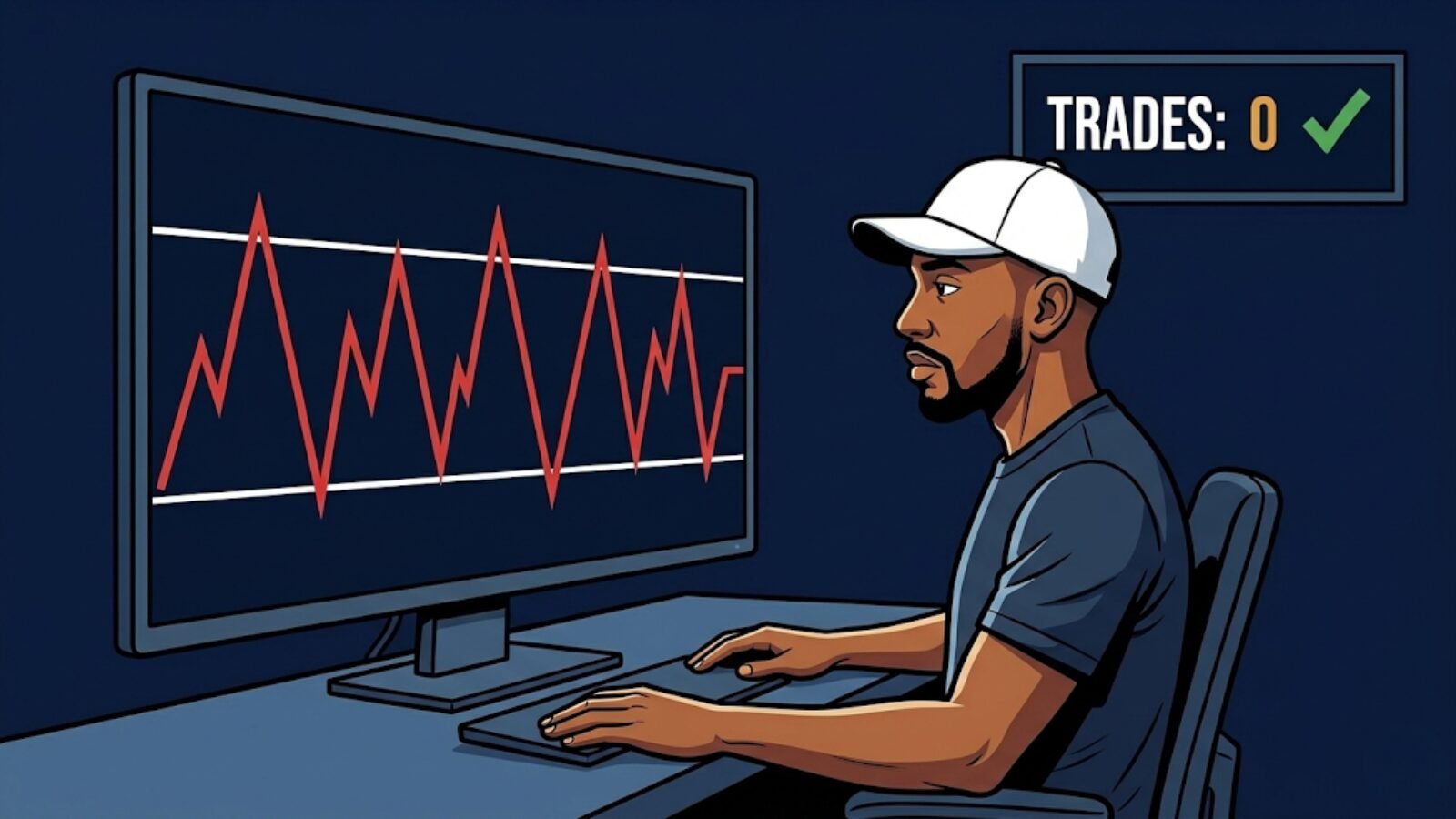
Back-to-back no-trigger sessions. Two mornings in a row where the market moved, conditions existed, and the system never generated a valid entry. The energy going into this particular morning was not at its peak either. More sleep was needed. The decision to show up anyway was not about discipline in the motivational sense. It was about passion. Trading is what gets the day started regardless of how rested the body feels going into it.
And on a morning like this one, the most valuable thing the session produced had nothing to do with a trade.
Why Does a Strategy Stop Working in Choppy Conditions?
The frustration that comes with consecutive no-trigger sessions in a choppy market is real. And it almost always triggers the same internal question: is something wrong with the system?
Most of the time the honest answer is no. The system is fine. The conditions are not.
A strategy built around directional movement, breakouts, trend continuation, follow-through after a level gets tested, requires the market to actually move in a direction. When the market is swinging back and forth inside a range, testing levels from both sides, failing to follow through after a breakout attempt, those conditions are not what the strategy was designed for. The system is not broken. The environment it was built for is just not present right now.
That distinction is one of the more important ones to internalize in trading. A system not working in the wrong conditions is evidence that the system has parameters. That is a feature, not a flaw.
The frustration that comes from expecting a strategy to perform in conditions it was never built for is not a signal to change the system. It is a signal to read the conditions more honestly.
What Does the Market Actually Look Like When Conditions Are Choppy?
This session painted the picture clearly. The overnight range rippled above 50% of the previous session range, advertising potential to break back towards the ATH. But from the moment RTH began, NQ continued the pre-market tennis match, swinging above and below key reference levels repeatedly, testing the opening range more than once, creating a new RTH high just to immediately retrace back inside the opening range. Multiple minor peaks formed throughout the session with scattered supply interest that never resolved into the kind of clean directional structure a trend-following approach needs.
Price was up and down, top to bottom, bottom to top, working through levels without committing to either side. An economic event was scheduled at A-period halftime and produced no meaningful spike. And then, almost as if on cue, the momentum came right at the end of my active trading window, same as the day before.
This was observed from the lens of my system. But it’s important to keep in mind, the market does not arrange itself around individual trade windows. The session told a clear story about what conditions were in play. Reading that story for what it was, rather than waiting for it to become something else, is where the session’s real value lives.

What Should You Do When the Strategy Does Not Fit Current Conditions?
Two options exist in this situation and only two.
The first is to adjust the approach for the conditions. Some traders build multiple systems specifically for this reason, a directional system for trending environments and a mean-reversion or range-based system for choppy ones. Having both available means conditions dictate which tool comes off the shelf rather than forcing one tool to work in every environment.
The second option is patience. Wait for the conditions the current system was built for to return. This sounds passive. It is not. Staying out of a market that does not fit the system while maintaining the full pre-session routine, tracking what the auction is doing, documenting the patterns forming, and keeping the process intact is an active form of discipline that most developing traders do not give enough credit.
What does not serve the process is the third option that sometimes gets chosen by default: forcing the current system into conditions it was not designed for because the desire to participate is stronger than the read on the environment. That is where unnecessary expenses come from. Not from a broken system. From a correct system applied to the wrong situation.
Capital preservation is a legitimate session outcome. Two consecutive no-trigger days in choppy conditions that close without a single bad trade are two days where the account stayed intact for the conditions that are coming. That is healthy for a growing account and your longevity as a trader.
How Do You Know When Conditions Have Actually Changed?
This is where patience becomes a skill rather than just a word.
The instinct after a few sessions of choppy, range-bound action is to jump at the first sign of momentum. A vol spike appears, price makes a sharp move, and the brain immediately wants to interpret it as the environment shifting back to something tradable.
The discipline required here is to let Wholesale prove conditions have changed before acting on that belief. A single momentum candle is not a trend. A breakout that has not been confirmed by follow-through is still inside the range until it is not. Staying anchored to what is actually being printed rather than what the emotional brain is hoping for is the work.
This morning’s premarket notes had a specific line about not forgetting what got the process to this point. That is a reminder to stay grounded in accumulated evidence rather than reacting to a momentary print that might look like a shift but has not proven itself yet. The market has to earn the belief that conditions have changed. The patience required to wait for that proof is the same patience that keeps the account intact during the periods when the proof is not there.
Trading Is a Game Taken Seriously
There is a framing that came up during this session that is worth naming directly because it captures something real about how the practice feels from the inside.
Trading is a game. And while games are designed to be played for fun, this one should be taken very seriously.
That is not a contradiction. Professional sports are games. Professionals have fun and enjoy the games they play. They are also serious pursuits where real things are won and lost, where preparation separates consistent performers from inconsistent ones, and where the discipline to stay in the process during unfavorable conditions is what makes the favorable ones profitable.
The traders who handle choppy, slow, no-trigger sessions the same way they handle active, high-opportunity sessions are the ones building something durable. The habits formed on the quiet days carry into the active ones. The reverse is also true: the habits broken during slow periods, the forced trades, the criteria drift, the impatience, all of that shows up when the conditions get better and the execution matters most.
Execution perfection is available in every single session regardless of whether a trade gets taken. Perfection in this context is not about the result. It is about whether every decision made during the session was inside the plan. That standard can be met with zero trades. It can be missed with three winning ones.
This is a core principle in Pull the Trigger: How to Stop Missing the Trades That Pay. The execution is the standard. The outcome is the byproduct.
Recognizing Patterns Worth Developing for the Future
Something else useful came out of both of these choppy sessions that will outlast the no-trigger result on the scoreboard.
Patterns were observed. Multiple instances of a specific setup type appeared throughout the session, in conditions that did not qualify under the current system’s rules, but in ways that are worth studying for potential development into a future plan. The repetition was notable. The conditions that produced it were consistent enough to document.
This is how a strategy library gets built over time. Not all at once, not through copying someone else’s approach, but through patient observation of repeatable conditions in a live environment, followed by honest documentation, followed eventually by backtesting to determine whether the pattern holds up across enough data to earn real capital.
The pre-trade routine going into this session had surfaced a specific concept that then appeared live in the market multiple times. Whether that is coincidence or whether consistent preparation sharpens pattern recognition in ways that are hard to quantify is an open question. The observation is real either way.
A pattern observed but not acted on, documented for future study, is a more disciplined response than a pattern acted on before the work has been done to validate it.
Patience Is Not Passive
Two no-trigger sessions. No expenses, no results on the scoreboard, no trades to review in the journal.
And still: patterns documented for future development. A clear read on market conditions maintained throughout the observed session. The system applied correctly, which in these conditions meant staying out. The pre-session routine completed. The plan followed to 100% accuracy.
Patience in trading is not waiting and hoping. It is active discipline applied to the things within control while releasing the things that are not. The market conditions on these two days were not within control. The response to those conditions was.
The market will return to the environment the current system was built for. It always does. The only question worth asking in the meantime is whether the process will still be intact when it gets there.
Perfection belongs to the execution, more than the setup.
Trade it easy ✌🏾



