Trading is risky! Past performance does not guarantee future results. Click here to read our full Disclaimer

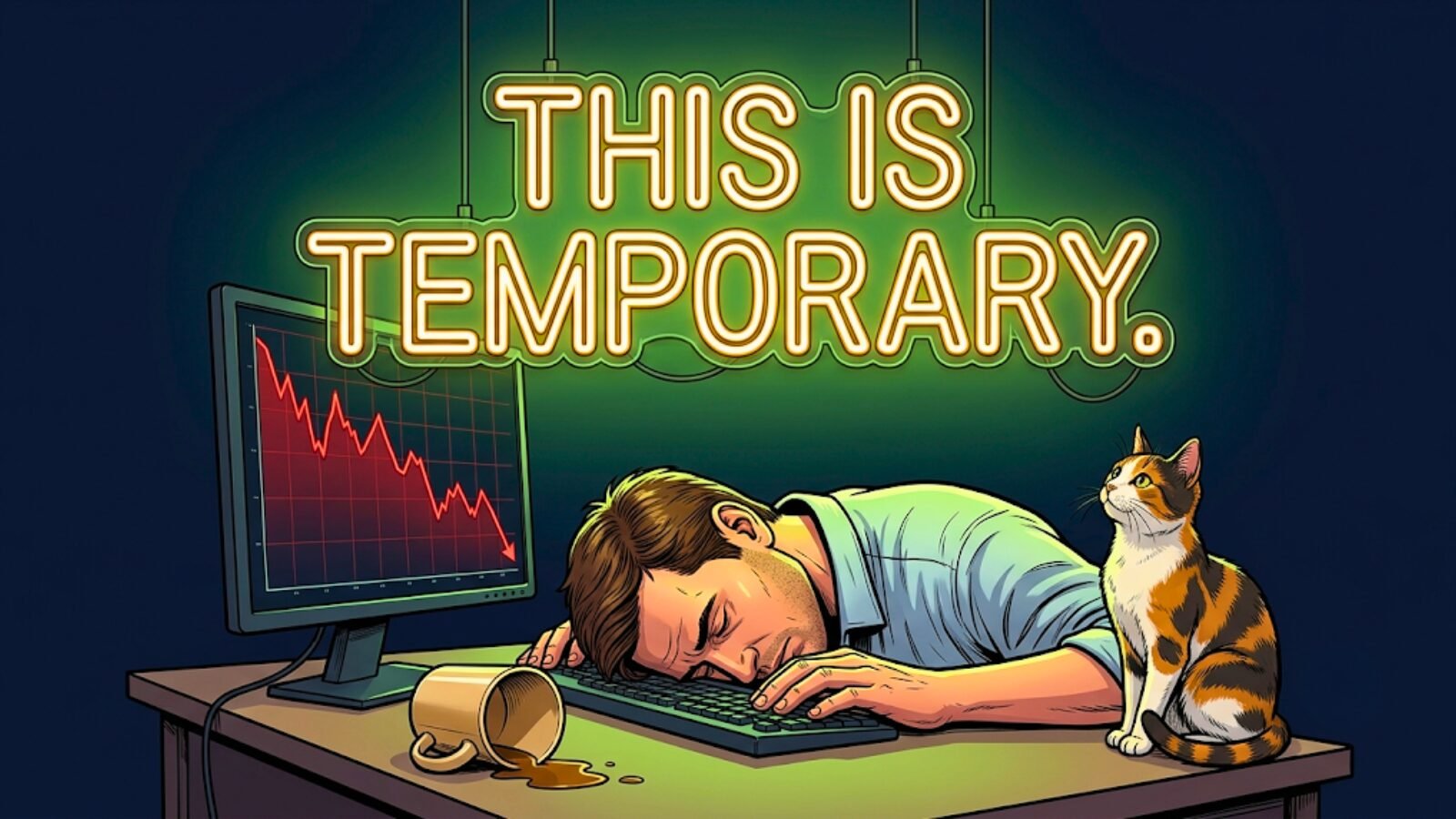
“Unlike combat, every risk you take as a trader is recoupable.”
That quote did not come from a book or a motivational post. It came from a real comparison that carries real weight. In combat, the risks taken can be irreversible. The consequences can be permanent. There is no “making it back” from what can happen in that environment, such as losing a body part, a bodily function, or ultimately your life.
Trading is not that. Not even close.
And yet the emotional weight that gets placed on a losing trade, the shame, the frustration, the spiral that follows, often looks like a response to something permanent and catastrophic rather than something that is, at its core, fully recoverable. That disconnect is where most of the psychological damage in trading actually comes from.
Why Does Losing Money Feel So Much Worse Than It Actually Is?
Loss aversion is not a character flaw. It is a deeply wired psychological default that research has shown causes losses to feel roughly twice as painful as equivalent gains feel good. That is not unique to traders. It is human.
The problem is what happens when that default runs unchecked in a trading environment.
The validation research behind this is striking in how consistent the language is. Traders across experience levels and markets describe losses in identity-level terms: “sick,” “like an idiot,” “my own worst enemy,” “genuinely worried about my mental health.” A single losing trade or a rough stretch does not just register as a financial event. It registers as evidence of personal failure.
That framing is doing enormous damage to execution quality, and it is almost never examined directly.
Here is the reframe that changes everything: a monetary loss in trading is not permanent, not irreversible, and not life-threatening. The money can be made back. The account can be rebuilt. The path forward exists regardless of how bad the current stretch feels.
Losses hurt more than they should because they are being treated as something they are not.
Where the Fear Actually Comes From
When I started day trading, there was very little fear around losing money. Financial security from a steady job meant that the capital being traded felt like practice capital. A losing session might have stung a little and that was about it. The execution was cleaner, the decisions were more grounded, and the process felt more sustainable than it did later (although there were plenty newbie mistakes).
I developed fear after I shifted away from my initial strategy and decided to make the transition to full-time trading. The stakes changed. What had been discretionary capital became survival capital, at least emotionally. Every losing trade now carried the weight of the question: can this actually work? Is this going to cost me the life I am trying to build?
That shift in emotional framing changed everything about how the sessions ran. Not because the strategy was different or the market had changed. Because the meaning attached to the monetary outcome had been elevated to a level where clean execution was almost impossible.
Survival capital and practice capital look identical in the account. The psychological difference between them is enormous.
When the financial pressure of full-time trading elevated the stakes on every single position, the fear that had not been present before showed up, and it affected everything. Hesitation on valid setups. Early exits to protect gains that the plan called for holding. Frustration after losses that bled into the next session. The exact sequence the validation research describes as the most common path to blown accounts and broken systems.
This is something that we walk-through directly in Pull the Trigger: How to Stop Missing the Trades That Pay. The fear that breaks execution is almost never about the trade itself. It is about what the outcome of that trade represents emotionally. And until that representation gets examined and corrected, no amount of strategy improvement will fix the execution problem.

What "Recoupable Risk" Actually Means in Practice
Even significant losses, the kind that feel catastrophic when they happen, are recoverable in the environment that exists today.
The internet has created more pathways to income generation than at any point in history. AI tools have lowered the barrier to building something new. The skills developed through years of active market participation, risk assessment, pattern recognition, systematic thinking, transfer to other contexts. The path back from a significant trading loss is not easy, but it exists, and it is more accessible now than it has ever been.
Sometimes recovery requires doing things that feel like steps backward. Returning to a 9-5 to rebuild the financial foundation. Stepping back to a smaller account to rebuild the process without survival pressure. Those moves feel like retreat. They are not. They are strategic resets that remove the emotional weight of survival capital from the execution environment.
Before I knew it, I had to face with the decision of returning to work. It was not because of trading losses specifically, but the lesson about the relationship between financial pressure and execution quality was real regardless of the cause. The time away from full-time trading was not wasted. It was part of the longer arc.
The distinction that matters most is between a setback and a permanent outcome. They are not the same thing. Treating them as equivalent is the psychological error that causes the most damage.
How Putting Too Much Weight on Monetary Risk Breaks Execution
Deep research and time spent across trading communities maps the same sequence repeatedly, with almost identical language regardless of the market or the experience level of the trader.
It starts with the fear of losing. That fear generates hesitation on valid setups. The hesitation produces a missed trade. Watching that trade hit the target without participation generates frustration. The frustration drives a chase entry outside the plan. That entry loses. The loss amplifies the original fear. The spiral accelerates.
Every step in that sequence flows directly from the original overweighting of the monetary risk. The fear was the fuel. Everything else was the combustion.
The practical fix is not to eliminate the fear, which is neither realistic nor necessary. It is to redirect the emotional energy toward what is actually within control.
- Entry criteria
- Position sizing
- Exit rules
- Plan adherence
The monetary outcome of any single trade is not fully within a trader’s control. The quality of the execution is. When the emotional investment shifts from the outcome to the process, the fear loses most of its leverage. A loss on a correctly executed trade is not the same experience as a loss on a panic entry made outside the plan. One is data. The other is damage.
The traders who execute cleanly are not fearless. They have recalibrated what the loss actually means. Money lost on a well-executed trade is the cost of doing business in a probabilistic environment. It is not evidence of failure. It is not a verdict on the trader’s ability. It is just a trade that did not work, inside a process that still does.
Losses destroy psychology when they are treated as more than that. Recoupable risk is the reframe that changes the relationship.
A Note on Strategy Development: Price Action vs. Structure
One of the more interesting observations from this session involved the distinction between live price action and historical bar structure, and how that distinction shapes the rules a strategy can actually use.
Price action is what is happening right now, in real time, as the market moves. Structure is the historical record of closed bars, the reference framework built from what has already happened. Both are useful. They are not the same thing, and confusing them creates a specific kind of execution problem.
If a strategy is built purely from historical closed bar information, the rules for that strategy must align with how that information is generated. That means closing positions after bars close, not making decisions mid-bar based on live price movement that has not yet resolved into structure. A strategy built on structure but executed against live price action is essentially testing two different things at once and attributing the results to the wrong variable.
The language used to narrate what the market is doing during a live session also matters more than most traders realize. Neutral, descriptive language around supply and demand, rather than emotionally charged or directionally biased language, helps preserve the emotional neutrality required for clean decision-making.
Think “inventory low” instead of “buyers stepped in” or “demand zone”. Price drifting lower with constant swing low pivot points from a “buyers” may mask the actions of a seller collecting profits. For your strategy, either perspective is likely irrelevant until you start emotionally investing your attention in favor of one side over the other.
The words chosen in the moment shape the quality of the read in that same moment. That connection is subtle and real.
You Can Make It Back
This session ran in a volatile environment, with heavy swings and a bearish primary posture throughout. One trigger appeared, one position was taken, and it exited at the front run target area fully per plan. The session closed with a positive result and well before the window ended due to a scheduled meeting.
By the scoreboard, a clean morning.
But the more important work happened in the session notes before a single candle printed. The reminder that every risk taken as a trader is recoupable. That the emotional weight being placed on monetary losses is almost always disproportionate to what those losses actually represent. That the path back exists, regardless of the size of the setback.
The traders who survive drawdowns and come back from them are not the ones who never lose. They are the ones who never let a monetary loss become an identity loss.
Money is recoupable. The confidence that gets eroded by treating every losing trade as a catastrophe is a much harder thing to rebuild.
That distinction is the fix. Not a better strategy, not tighter risk parameters, not a different setup. The fix is in understanding what a loss actually is, and refusing to let it be anything more than that.
Trade it easy ✌🏾



