Trading is risky! Past performance does not guarantee future results. Click here to read our full Disclaimer

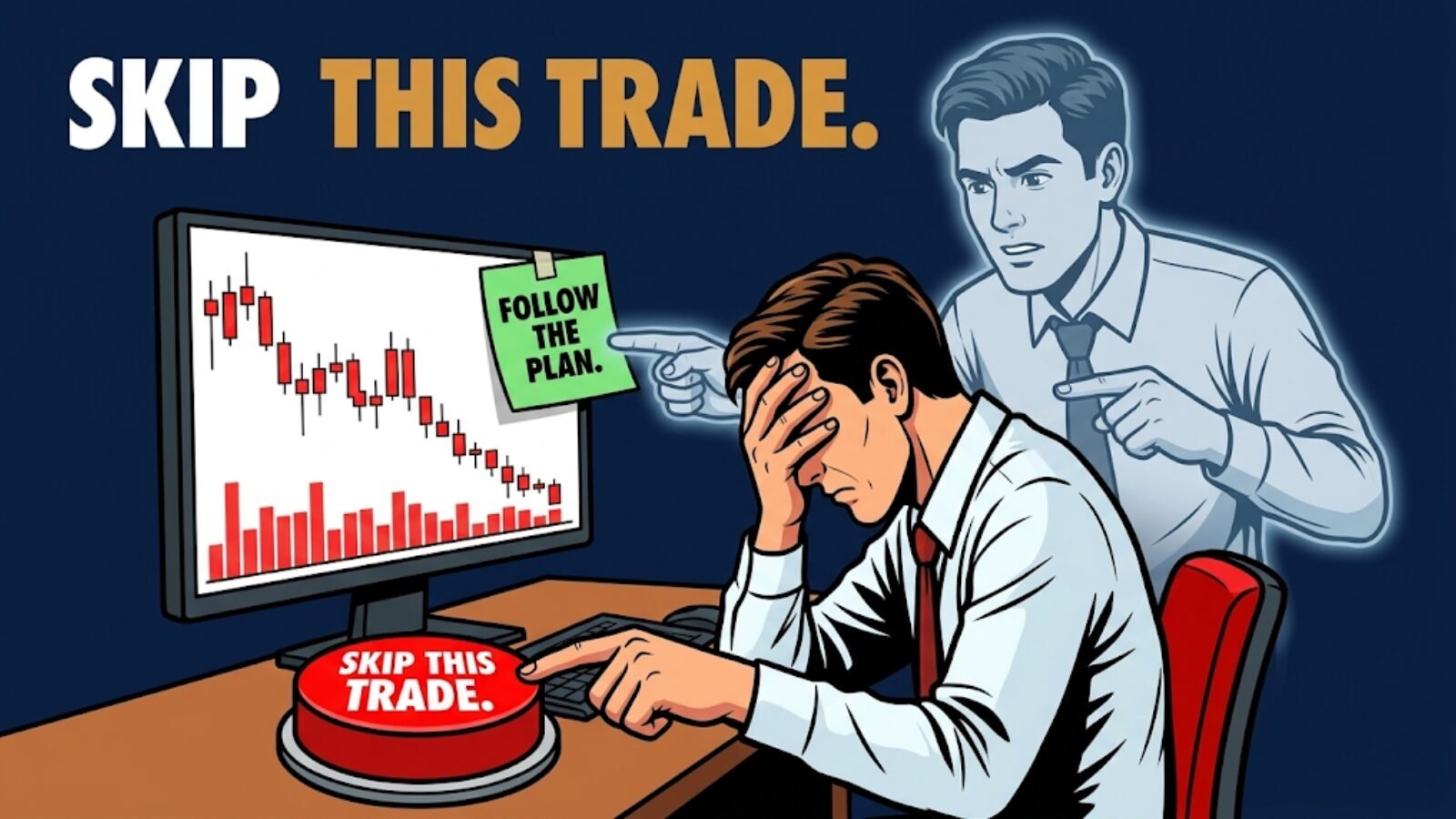
There is a question that comes up over and over in trading, especially during rough stretches: how do you stay consistent with a strategy when it is not working?
It is one of the most important questions a trader can ask. And the answer is both simpler than most people expect and harder than most people want to hear.
This session was a good example of what that looks like in real time. The market was volatile, the overnight range was wide, and things did not go smoothly out of the gate. The position resulted in an expense initially, and then a decision had to be made: pull back, or follow the plan and take the next trigger.
The plan was followed. The second trigger moved toward profit. The session closed in the green.
That sequence only happened because the trigger was pulled. And that is the whole point.
Drawdown Does Not Break Strategies. Trigger Shyness Does
When a strategy goes through a rough patch, the natural instinct is to pull back. Take fewer trades and be more selective. Wait for the “perfect” setup before committing again.
That instinct feels protective. It feels disciplined, but what it actually does is take all the downside of the losing period while cutting off access to the upside that eventually follows.
Losses are going to happen. That is not optional. What is optional is whether a trader is still in the game when the setup that recovers the day shows up. If trigger shyness has taken over, that moment comes and goes without participation. The loss stays on the books and the recovery never lands.
Getting all the downside without any of the upside is not risk management. It is the worst of both worlds.
The Trigger-Shy Spiral
Here is how the spiral usually works.
A trade loses. It hurts a little. The next valid signal appears and there is hesitation. The trade is skipped. That trade also loses. Now the hesitation feels justified. “Good thing I sat that one out.”
Then the next signal appears. Hesitation again. This trade would have won. Now there is regret. The next signal appears and there is pressure to make up for the missed winner. The trade is taken but for the wrong reasons, under emotional pressure instead of plan-based logic. That one loses too.
None of this is a strategy problem. It is entirely a psychology problem that compounds fast.
The habit being built during this spiral is the habit of not pulling the trigger. That habit does not stay in the losing periods. It carries over into the winning ones. When the strategy starts performing again, the same hesitation shows up because it was reinforced over and over during the drawdown. The muscle was trained in the wrong direction.
This is something I spent a lot of time writing through in Pull the Trigger: How to Stop Missing the Trades That Pay. The fear that builds during a losing stretch does not automatically go away when the results improve. It has to be actively addressed. And the way to address it is to keep executing, especially when it is uncomfortable.

The Only Way to Overtrade
Overtrading gets talked about a lot. Most of the time it gets framed as taking too many trades or trading too frequently. The real definition is simpler than that.
The only way to overtrade is to trade outside the plan.
If the plan says take this signal and the signal appears, taking the trade is not overtrading. It is executing the plan that was developed through real work. If the plan does not include a signal and a trade gets taken anyway, that is overtrading, regardless of how convincing the setup looked in the moment. Regardless if it was the 2nd trade or the 20th trade.
Everything comes back to the plan. Consistency comes from the plan. Discipline is measured against the plan. Results, over a large enough sample size, reflect the plan. Without the plan as the anchor, every decision becomes a judgment call made under pressure, which is exactly the environment where bad habits form fastest.
There is a version of trading advice circulating online that says to be picky with entries. Wait for the A-plus setups. Skip the ones that do not feel right.
That advice is not universally wrong, but it is generally missing critical context. Being selective is a skill that has to be earned through a deep understanding of a specific strategy. Applied without that foundation, it gives emotional hesitation a legitimate-sounding excuse. “I was being selective” and “I froze and did not take the trade” can look identical from the outside.
The 95% Rule (Opinion)
Before any adjustment to a strategy makes sense, there is a prerequisite that has to be met: the plan needs to be followed with at least 95% accuracy over a meaningful sample of sessions.
That number is a personal standard, not an industry benchmark. But the logic behind it is solid. A plan that is not being executed consistently cannot produce reliable data. The results are contaminated by the inconsistent execution. It is impossible to know whether the strategy needs work or whether the execution does, because both variables are moving at the same time.
This is one of the most under-appreciated ideas in trading. Most traders who think their strategy is broken have never actually traded it cleanly enough to know for sure. They have been running a version of it filtered through hesitation, selective application, and emotional override. The strategy never got a fair test.
Clean up the execution first. Follow the plan with 95% accuracy over enough sessions to generate real data. Then look at the results and evaluate. At that point, the conversation about adjustments is grounded in actual evidence instead of feelings from a rough week.
Once that execution consistency is proven, then the door opens to evaluate whether the strategy needs refinement for the current environment. Not before.
What Drawdown Actually Gives You
Difficult periods in trading are underrated as a training tool.
When the market is choppy, when the results are not there, when every session feels like a grind, that is exactly when the most important skill is being developed. Not finding winners. Not reading price action better. The skill of maintaining the habit of pulling the trigger when the plan says to, regardless of how the last trade went.
That skill, built during the hard sessions, is what makes consistency possible when things get easier. The trader who keeps executing through a drawdown is training long-term profitable habits. The trader who pulls back is training habits that lead to frustration and mistakes.
This session was a small but clear example of that. After an initial expense, the plan called for taking the next valid signal. That trigger was pulled and moved toward profit. If hesitation had taken over after the first loss, that second trigger would have been missed. The session would have closed in the red instead of the green, not because the strategy failed, but because the execution did.
Making the Market Make Sense to You
One thing that helps with staying logical during volatile or choppy sessions is building a personal language around what the market is doing.
Traditional candlestick pattern names and indicator labels work for some traders. For others, translating market behavior into familiar terms from other areas of life, business, marketing, sports, whatever is deeply understood, reduces the emotional noise that comes from trying to interpret something that feels foreign under pressure.
This is not a gimmick. It is a practical psychological tool. When the market is doing something that can be connected to a concept that is already understood, the emotional charge around it drops. The decision-making becomes cleaner. The plan is easier to follow because the situation feels familiar instead of threatening.
Building that personal framework takes time. But it is worth it. Making the market make sense on your own terms is a real form of psychological edge.
The Plan Is the Way Through
Drawdowns end. Rough patches pass. But the habits built during those periods carry forward regardless of which direction the results go.
The trader who keeps following the plan through a difficult stretch comes out the other side with stronger execution habits, cleaner data, and a more grounded relationship with the strategy. The trader who pulls back comes out of it with a confirmation bias problem and a hesitation habit that will cost them trades even when the market cooperates.
The only way out of a drawdown is through it, with the plan intact.
For traders working through the mental side of staying consistent under pressure, Pull the Trigger: How to Stop Missing the Trades That Pay is the resource I built specifically around that challenge. The psychology behind why the trigger does not get pulled, and what to do about it.
Trade it easy ✌🏾



