Trading is risky! Past performance does not guarantee future results. Click here to read our full Disclaimer

There is a common belief in trading that goes something like this: if the results are not there, something must be wrong with the indicators. Or the entries. Or the exits. Fix the chart, fix the trader.
That belief is only part of the picture. And in most cases, it is not even the most important part.
This session happened to be a no-trade day. The broker increased margin requirements ahead of an FOMC afternoon, and the rule is simple: when margin goes up, trading stops. No exceptions, no second-guessing, no trying to find a workaround because the morning session looked fine. The rule exists so those decisions do not have to be made in real time under pressure.
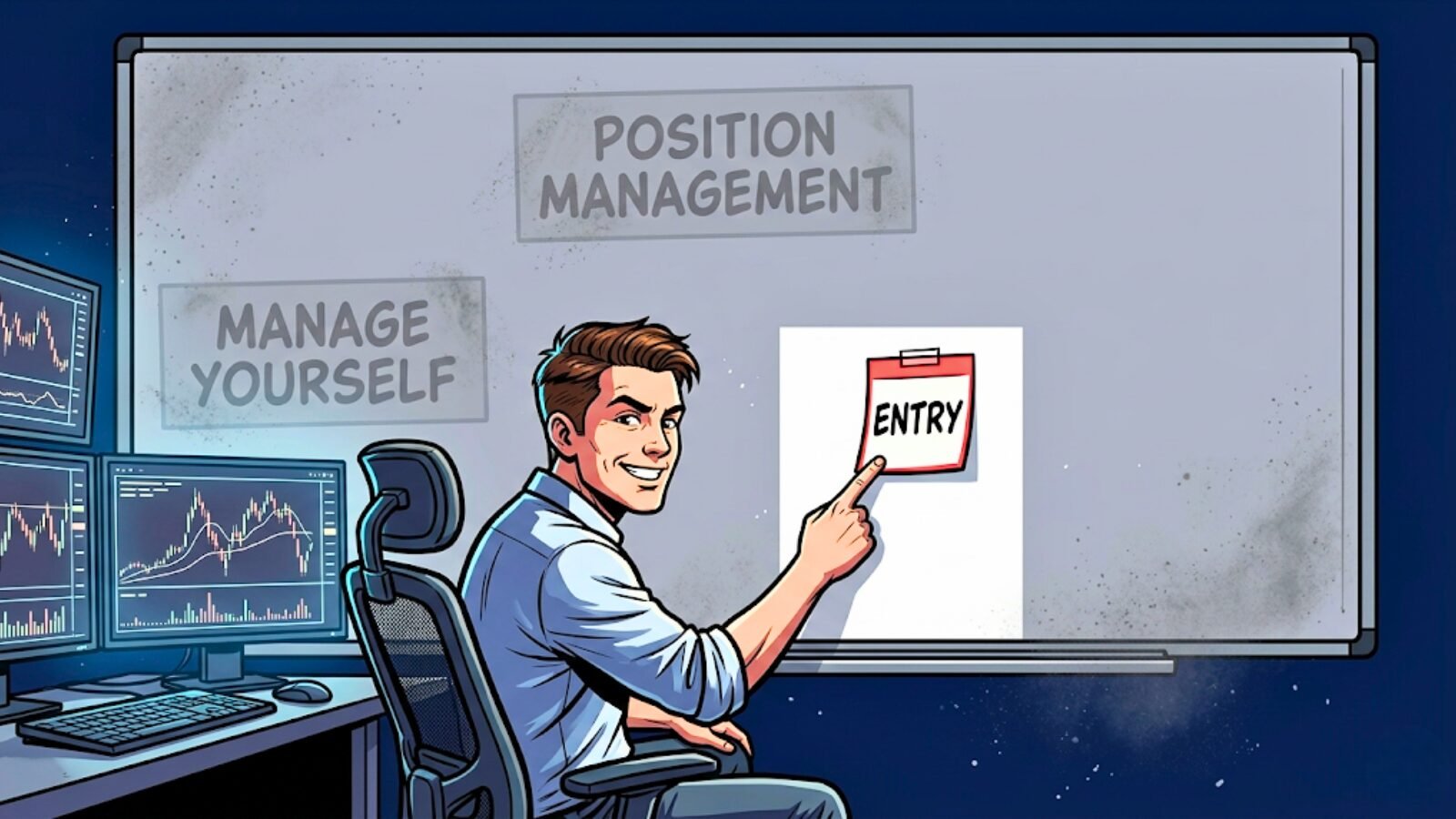
But what a no-trade day creates, if it is used well, is something most active trading sessions cannot provide: uninterrupted time to think, research, and work on the parts of the business that usually get pushed aside. This particular session turned into one of the more productive conversations around strategy development in a while. Specifically, a framework started to take shape that I’m calling the Strategy Development Trifecta (a cousin to The Perfect Strategy Trifecta).
The No-Trade Day as a Hidden Tool
The instinct when trading stops is to feel like a day is being lost. There are no actions to take. The market is moving and participation is on the sideline.
That feeling is worth examining, because it is usually not accurate.
No-trade days, when your rules create them, are not wasted days. They are investment days. Research gets done. Ideas get tested. The task list that never gets touched during active sessions finally gets some attention. All of that happens without the mental load of managing open positions.
One thing to be careful about, though: observations made during a no-trade day should not automatically be used to adjust an active strategy. If there is no plan to trade those specific conditions going forward, then what happens during a no-trade day is interesting data, not actionable data. Keeping that distinction clear matters.
The Strategy Development Trifecta
Most traders build one-third of a trading system and call it complete.
They have a setup. They know what to look for. They have studied their entries and their exits. That is real work and it counts. But it is only one piece of what a fully developed approach actually requires.
Here is the framework that came into focus during this session. A complete strategy development process has three components:
1. Preparation to Execute
This is the part most traders work on. Defining the signal. Knowing the trigger. Building the pre-session routine that puts the mind and the platform in the right state to recognize opportunities when they form. This is where most of the study time goes, and rightfully so. But it is not enough on its own.
2. Management of the Position
Once a trade is on, a new set of decisions begins. When to stay. When to step away. What the exit criteria look like and how systematic adjustments get made while holding. Traders who have not built this out clearly are left making it up in real time, which is exactly when emotional interference tends to peak.
3. Management of Self
This is the piece that almost always gets left out. Mindset. Emotional state going into the session. Post-session routines. Physical health. Rest. All of it.
Most traders treat self-management as something separate from trading, like it is a lifestyle choice that has nothing to do with what happens on the charts. Experience says otherwise.

Emotions Cannot Be Removed. They Can Be Redirected
There is a version of trading advice that tells traders to remove emotion completely. Become a machine. Feel nothing.
That is not realistic, and chasing it tends to create more problems than it solves.
Emotions are not going away. The question is where they are being directed. When emotional energy gets tied to monetary outcomes, specifically to the P&L number updating in real time, that is when interference shows up. It shows up as closing a position too early because it hurts to watch. It shows up as holding too long because walking away from a loser feels like admitting something. It even shows up in fully automated systems, where traders who swore they would never interfere end up overriding or tweaking their own automation after a drawdown.
The shift that actually works for most is redirecting that emotional energy toward what is within control. Position sizing. Risk parameters. Hold duration. The execution of the plan. Those are things a trader can control. The monetary outcome of a filled order is not, and trying to control it emotionally creates friction that costs more over time than the original discomfort ever would have.
This is something I wrote about at length in Pull the Trigger: How to Stop Missing the Trades That Pay. Moving the pain away from the P&L and toward the accuracy of execution changes the entire emotional relationship with trading. When missing a trade hurts more than losing on one, the motivation to follow the plan gets a lot stronger.
Physical Health Is Part of the Trading System
This came up in a real way during this session, and it is something that deserves more attention than the trading community usually gives it.
There is a direct connection between physical condition and mental performance. That is not a soft claim. It shows up in how long focus can be sustained during a session, how quickly the mind resets after a loss, how steady the emotional baseline is when volatility spikes.
The traders who have neglected this and experienced a health crisis mid-career know how fast things can unravel. A trading system that was working, with statistics to back it up, can become nearly unusable when the body is not operating well. Not because the system changed, but because the person running it is compromised.
Starting self-care early in a trading career is not a luxury. It is a compounding investment in performance. Every session benefits from it, even if the connection is not obvious in the moment.
This means treating physical health as part of the trading process, not as something that happens after trading is figured out. Fitness, sleep, nutrition, stress management. These are not separate from the system. They are the foundation the system runs on.
Tools That Support the Process Without Adding to the Load
One of the ongoing challenges for a trader who also creates content is building a workflow that serves both without one of them suffering.
Session recordings are valuable on both sides. For the trader, they serve as game film. For the audience, they provide a transparent look at a real trading process. But editing raw session footage is a significant time commitment, and the tools have to be right.
During this session, some time went into exploring Descript’s Creator package for handling both trading session recordings and other video content. Their features for automating social media clips is worth testing. YouTube Studio’s native editing tools were also evaluated and found to be too limited for what detailed session content actually requires.
The principle here is straightforward. Any tool added to the workflow has to earn its place. If it adds more friction than it removes, it is not the right tool yet. The goal is to find setups that serve both the trading process and the content pipeline without creating new problems to manage.
The Whole System, Not Just the Chart
A trading system is not just what happens on the screen. It is also how a trader prepares before the session, how positions get managed while they are open, and how the person sitting at the desk is taking care of themselves day to day.
Most of the energy in trading education goes to the first third. The setup → The signal → The entry → The financial outcome. That is important, but it is not complete.
No-trade days are a reminder that the business of trading involves a lot more than the trades themselves. Research gets done. Frameworks get refined. The self-management piece gets the attention it usually does not get during active sessions.
The trader who puts real work into all three components of the trifecta, preparation, position management, and self-management, is building something that holds up over time. The one who only works on signals and exits is building something fragile, and will likely not understand why when it starts to break down.
Trade it easy ✌🏾



