A trader in a suit sits alone at a massive corporate boardroom table, feet up and unbothered, while flat candlestick charts fill multiple monitors and news reporters crowd the windows outside. Text reads: "No trades today. The CEO doesn't clock out.

Why Trading Isn’t a Job, and Why That Distinction Changes Everything

Trading is risky! Past performance does not guarantee future results. Click here to read our full Disclaimer

There are sessions where the market gives a trader absolutely nothing. No clean setups. No triggers. Just a quiet tape that dances in a small range while the clock keeps moving. I just sat through one of those sessions, and it ended up teaching me more than a busy day probably would have.

This post is not about strategy. It is not about profit or loss. It is about how a trader frames the work they are doing, how they handle patience, and why the current pace of the market is not actually broken, even if it feels that way.

Key Takeaways

  • Trading is a business, not a job. The language a trader uses shapes the behavior they repeat.
  • A no trigger session is a patience rep, not a wasted day.
  • Today’s slower market pace is actually closer to historical normal than post 2020 tape.
  • Platform trust and checklists are part of the psychology stack, not separate from it.
  • Systems built on buffer zones hold up better than systems anchored to exact prices.
  • Audit the words. “Confirmation,” “job,” “revenge,” and “chase” all carry baggage.
  • Discipline compounds. The work inside trading builds the trader outside of it.

The Reframe That Changed Everything for Me

One constant I hear in the trading community is people calling trading a “job.” It feels right. You show up every morning, putting in hours, trying to earn income from it. But the more I sit with that word, the more I realize how it can quietly shape a trader’s behavior in the wrong direction.

A job comes with a boss, a schedule someone else sets, and a paycheck that shows up whether the work was great or just okay. A job lets a person blame the company, the manager, the market, or anything else when things go wrong. That is not what trading is.

Trading is a business. The trader has 100% control and 100% responsibility. No one sets the hours. No one hands out a paycheck. The trader chooses when to sit down, when to walk away, when to push, and when to pause. Every outcome lands on the trader. That sounds heavy, but it is actually freeing once a trader accepts it.

This shift is something I talk about in Pull the Trigger. In that book, I share how I stopped blaming the market for my results and started owning my actions. The same idea applies here. A job mindset keeps a trader waiting for something to happen. A business mindset keeps a trader building towards something with purpose.

A No Trigger Day Is Still a Training Day

The session that inspired this post had zero triggers. Not one. Price danced around the overnight low, crossed a few areas of interest, and never gave my plan a real reason to click buy or sell.

A younger version of me would have forced something. I would have talked myself into a setup that was not really there, just to scratch the itch. That behavior is one of the exact traps I wrote about in Pull the Trigger. The fear of missing out, the urge to “do something,” and the quiet belief that sitting still equals failure. All of that is a job mindset wearing a trader costume.

The truth is simpler. A no trigger day is a training day for patience. The plan said no. Respecting that no is a rep. It is the same muscle a professional athlete builds in practice, the one that shows up on game day when things get loud.

Currently, I am in a drawdown for the month and the year. The last real position was a few sessions ago. Two full trading days have passed without a single trigger. Honestly, I am not worried about it. For one, I’ve been here before, where the year started in drawdown but ended in profit. Trading is an indefinite long term endeavor. This is a lifetime deal, not a season pass. Slow weeks do not end careers. Broken discipline does.

The Pace of the Market Is Not Broken

A lot of traders who started after 2019 think today’s market is slow, dead, or somehow off. I hear it all the time. The truth is that today’s pace is actually closer to what markets used to look like before that year.

Before 2019, holding a position for hours was normal. It was not unusual for a trade to develop slowly and give a trader time to think. Then micro futures contracts showed up around the second quarter of 2019, and the tempo picked up. In 2020, stimulus money flooded into the markets and the pace accelerated even more. A whole generation of traders built their expectations on that faster tape.

So when the market slows down like it has recently, a lot of traders panic. They think their edge is gone. They think the market is broken. In my opinion, the market is just going back to a pace that used to be normal (for now). If a system only works in high volatility conditions, the trader does not really have a system yet. They have a window. Windows close.

Slower conditions are actually a gift. They are a chance to strengthen patience and discipline without adrenaline covering up weak habits. A trader who can stay sharp during a quiet session can absolutely stay sharp during a loud one. The reverse is not always true.

Platform Trust Is Part of the Psychology Stack

One thing that quietly wrecks traders is the relationship they have with their platform. Data feeds, order routing, and software reliability are not just technical issues. They are psychological issues.

I’ve been dealing with a platform situation recently with uncertainty if an issue has been fully resolved. The temptation has been there to place a test order just to see. That is not due diligence. That is a discipline leak wearing a technical mask. A business owner does not test the cash register by ringing up fake sales during business hours.

The same thing happened with my streaming setup. I forgot to adjust my OBS settings appropriately for streaming on YouTube. Charts meant for a more private view ended up visible on a public stream. Small mistake, big lesson. Checklists are tools too, and they break when a trader stops treating them with the same respect as the trading platform itself.

In Pull the Trigger, I write a lot about pre trade checklists. The reason is simple. Checklists move a trader from the unknown side of a decision into the known side. The more of a session that lives on the known side, the less room there is for fear to creep in.

Designing Systems That Actually Breathe

Part of what I was thinking about during that quiet session was how automated systems get built. Not the specifics, but the philosophy behind them.

The traders who build brittle systems usually anchor them to exact prices. One specific number. One specific level. When the market does not hit that exact spot, the system does nothing, or it does the wrong thing. Smart market systems do not move in exact numbers. They move in zones.

A better approach, in my experience, is to design around buffer zones instead of rigid prices. Use a tolerance. Give the system a little room to breathe with the market instead of fighting it. That applies whether a trader is coding something fully automated or just building manual rules for themselves.

It also changes how a trader reads price action in real time. Instead of asking where exactly price is going, the better question becomes where an automated system might be positioned right now. That framing is calmer. It removes some of the guessing and puts the trader in the shoes of the larger players who actually move size.

Sponsored Zoi Teli'a
Feel your best. Trade your best. Your mindset is your edge. It starts with how you feel.
Shop Now →

Watching the Words a Trader Uses

Language is sneaky. The words a trader repeats to themselves eventually become the rules they trade by.

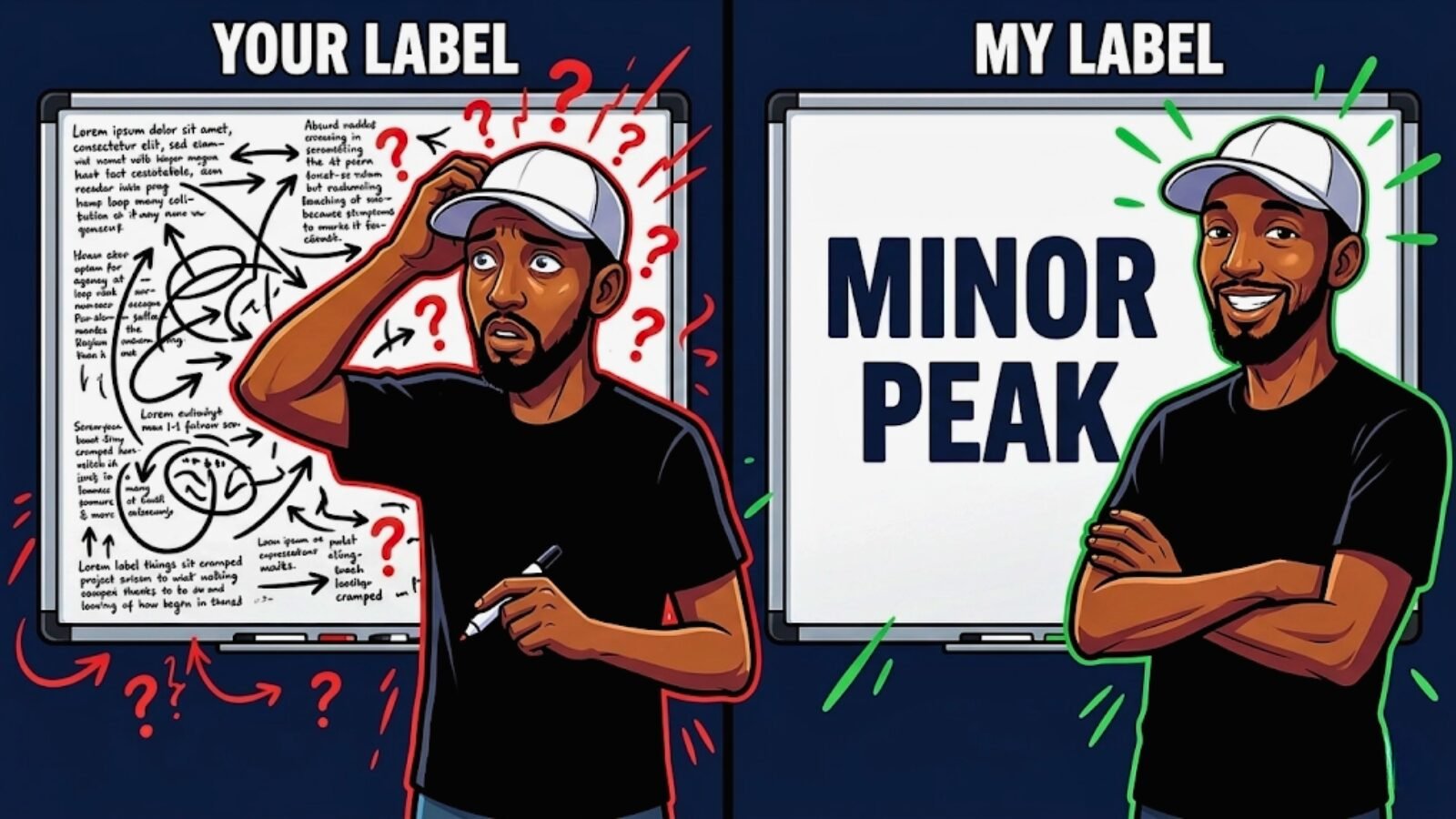
One word I removed from my vocabulary a while ago is “confirmation.” In Pull the Trigger, I go deeper into why that word quietly causes so many missed setups. Waiting for confirmation usually means waiting for certainty, and certainty does not exist in the market. By the time a trader feels confirmed, the opportunity could already be gone.

“Job” is another one, as we covered earlier in this post. “Revenge,” “prove,” and “chase” are words worth auditing too. Each of them carries a small emotional charge that pushes a trader into reactive behavior. A seasoned business owner does not chase customers. A business owner builds a system that attracts them.

Discipline Compounds, On and Off the Screen

One more thing I have noticed over the years. The same muscle that shows up for a quiet trading session shows up everywhere else in life too.

Yesterday I ran a 5K and hit a personal record. I did not get much sleep. The day was packed. But trading is the one thing that motivates me to get up regardless of how I feel, and that same motivation spills into everything else. Training, family, writing, business. It is all connected.

That is the real tell that a trader has crossed from job thinking to business thinking. They do not need the market to give them something on a specific day to keep showing up. They show up because the work itself matters, and because the long term version of themselves is counting on the short term decision to stay disciplined.

In Closing

Quiet sessions are mirrors. They show a trader exactly who they are when the market offers nothing. The traders who treat those days like training days are the ones still here a decade from now.

If any of this resonated, Pull the Trigger goes deeper into the psychology side of all of this, especially the execution side. And the full session by session journal is always live at mv3trader.com.

Photorealistic split-panel meme: calm restaurant owner sorting bills on the left, panicked day trader staring at a -$11 P&L on the right, with caption "Every business has expenses. Why do traders act brand new?"

Drawdown Is Not Defeat: How to Think Like a Business Owner When the Market Isn’t Paying

Trading is risky! Past performance does not guarantee future results. Click here to read our full Disclaimer

There’s a particular feeling that comes with sitting in a drawdown period. Looking back through the journal and realizing the last profitable session was weeks ago. Scrolling through the log and seeing expense, no trigger, no trigger, expense, expense. It’s the kind of stretch that makes it easy to start labeling things. “It’s been rough.” “It’s been bad.” “It’s been terrible.”

But here’s what I’ve learned after years of trading and marketing: the words matter. The language a trader attaches to their experience directly shapes how they respond to it. And that response is what determines whether the business stays open or shuts down.

The Language We Use Changes the Game​

I took some time today to go through my recent sessions. And I made a very deliberate choice in how I described what I was looking at. I didn’t say it’s been rough. I didn’t say it’s been bad. I didn’t say it’s been terrible or atrocious. Because it hasn’t been any of those things. It’s been a season of business. That’s it.

When a trader starts attaching emotionally charged language to a drawdown period, it does something to the psyche. It triggers a response. It creates urgency where urgency doesn’t belong. It makes the next session feel heavier than it needs to be. And that heaviness leads to decisions that are driven by emotion rather than by the plan.

This is part of what I explored in “Pull the Trigger” around the idea of neutrality. Looking at what happened without the lens of “good or bad” or “right or wrong.” If someone had to explain what happened in a trading session without using any of those words, the explanation would be much closer to the truth of the situation. And the truth is usually a lot more manageable than the story being told internally.

So I’ve made it a practice. Drawdown is not “bad.” It’s a season. Expense days are not “failures.” They’re operational costs. The language stays neutral because neutral language leads to neutral decisions. And neutral decisions are the ones that keep the business running.

Expenses Are Guaranteed. Profit Is the Objective.

Every single business that has ever existed has expenses. That’s not a maybe. That’s not a sometimes. That’s a guarantee. If someone opens a restaurant, there are food costs, labor costs, rent, utilities. Those expenses exist whether or not a single customer walks through the door that day. The business still has to pay.

Trading is the same. The one thing that is 100% guaranteed in this business is that there will be money going out. Expenses are built into the game. They’re the cost of operating. The objective is not to eliminate expenses because that’s impossible. The objective is to generate enough profit over time that it outweighs those expenses and keeps the doors open.

So when I look at a session that ends in a small net expense, I’m not panicking. I’m not spiraling. It would take a very long time to bleed an account out at that rate. And more importantly, the strategy is not designed to win every single session. It’s designed to produce returns over an extended period that far exceed the cost of the sessions that don’t go in my favor.

This is the mentality shift that separates traders who last from those who don’t. The ones who treat every expense day like a crisis are the ones who start making reactive decisions. They change their strategy mid-drawdown. They abandon their system. They chase. And then they really do blow up. Not because the strategy was broken, but because the emotional response to a normal part of business is what broke everything.

Knowing When to Change vs. When to Keep Going

One of the hardest things in trading, and honestly in any business, is knowing the difference between “this isn’t working and needs to change” and “this is just a season I need to ride through.”

I’ve been in drawdown for a stretch now. And the temptation is absolutely there to start tweaking things. To adjust the system. To add something, remove something, try a different approach. But here’s what I’ve come to understand: the amount of data I’ve collected since the last adjustment is simply not enough to make that call.

It’s not the time frame that matters. It’s the data. A trader can go through two months of drawdown and still not have enough data to justify a change if the conditions during those two months were limited to a specific type of market environment. What’s needed is data from the strategy’s highest potential sessions, data from the worst potential sessions, and data from everything in between. All the different conditions. All the different types of days.

The last time I made a significant change to my system, it took months of collecting data before I pulled that trigger. And that was intentional. Because making a change based on incomplete information is just as dangerous as not making a change when the data clearly says one is needed.

So for right now, the move is to keep collecting. Keep trading the plan. Keep journaling every session. And let the data tell the story instead of letting the emotions write it.

Structuring Risk: Max Profit Potential vs. Max Expense Potential

One thing that’s worth thinking about when building a trading system is how the risk structure is designed from the ground up. And I’m not talking about specific numbers or strategy details here. I’m talking about the framework.

The idea is simple: the maximum profit potential should exceed the maximum expense potential by design. Not by hope. Not by luck. By design. A trader can structure this in different ways. It can be done by limiting the number of consecutive expense positions allowed per session. It can be done by structuring the point values so that winning positions capture more than losing positions give back. Or it can be a combination of both.

The point is that symmetry is not required. A system does not need to have five potential winners balanced against five potential losers. In fact, that kind of symmetry might not serve the strategy at all. The power is in the asymmetry. Building the system so that even in a worst-case session, the damage is contained. And in a best-case session, the upside has room to run.

This is where the work happens before the market even opens. The structure of the risk plan is what gives a trader the ability to sit through drawdown without panicking. Because the plan already accounts for it. The worst-case scenario has already been defined. And when the worst case is known, it’s a lot easier to stay calm when the session isn’t going the way it was hoped.

Redefining the Reward: Why Profit Is Not the Prize

This is one I feel strongly about. The traditional way traders frame things is “risk to reward” and that reward is always tied to the P&L. How much money was made. How many points were captured. The dollar amount at the end of the session.

I don’t like that framing. And here’s why.

When the internal reward system is tied to monetary outcomes, the trader is essentially telling their brain that the only “good” outcome is making money. Which means every session that doesn’t make money triggers a negative emotional response. That negative response compounds over time. It creates anxiety, hesitation, and eventually fear. Fear of pulling the trigger. Fear of taking the next trade. Fear of the plan itself.

This is exactly what I wrote about in “Pull the Trigger.” The fear that stops traders from executing is often rooted in how their internal reward system has been wired. If profit is the only thing that gets celebrated, then every expense feels like punishment. And nobody wants to willingly walk into punishment.

So I flipped it. My reward is not profit. My reward is execution. Did I follow the plan? Did I take the triggers I was supposed to take? Did I exit where I was supposed to exit, or did I bail early because of a feeling? Did I chase, or did I respect the rules when I didn’t get filled?

When accuracy of execution becomes the measuring stick, the emotional relationship with the outcomes changes completely. A session that ends in a small expense but was executed with 100% accuracy to the plan? That’s a win. A session that ended profitable but involved chasing, breaking rules, and getting lucky? That’s not a win. That’s a liability waiting to show itself again.

The internal reward system is powerful. And every trader has the ability to take control of it instead of leaving it vulnerable to whatever the market does on any given day.

The Market Maker Mindset and Understanding the Audience

Something I think about a lot, and something I plan to break down more in upcoming posts, is the parallel between marketing and market making.

Wholesale, which is what I call market makers, has a job. That job is to facilitate orders and keep the market functioning. And to do that job effectively, they need to understand their audience. They need to understand how retail participants think. What they react to. What triggers them to send orders to the market.

This is literally marketing. If someone is running a business and trying to sell a product, the first thing any good marketer will say is: know the audience. Understand what they want, what they fear, what motivates them to act. And then position the product in a way that gets the desired response.

The same thing applies to how price moves. The structure that gets printed on the charts is not random. It’s designed to generate participation. And if a trader can start thinking about what other participants are likely thinking at any given point in the session, that perspective becomes incredibly useful. Not to predict where price will go, because nobody can do that. But to understand the behavior that’s driving the auction.

I see things in a very colorful way when it comes to how all of this works. The intricacies of it. And honestly, I’m much better at writing it out than explaining it verbally in real time. There’s a lot of nuance. But the core idea is this: wholesale isn’t the enemy. Wholesale is running a business. And understanding how that business operates gives a trader a significant edge in how they interpret what’s happening on the charts.

Patience, Breath, and the Moments Between Triggers

There are moments in every session where nothing is happening. Price is grinding inside a range. Volume is low. The supply floor is noisy but nothing significant sticks out. And the urge to do something starts building.

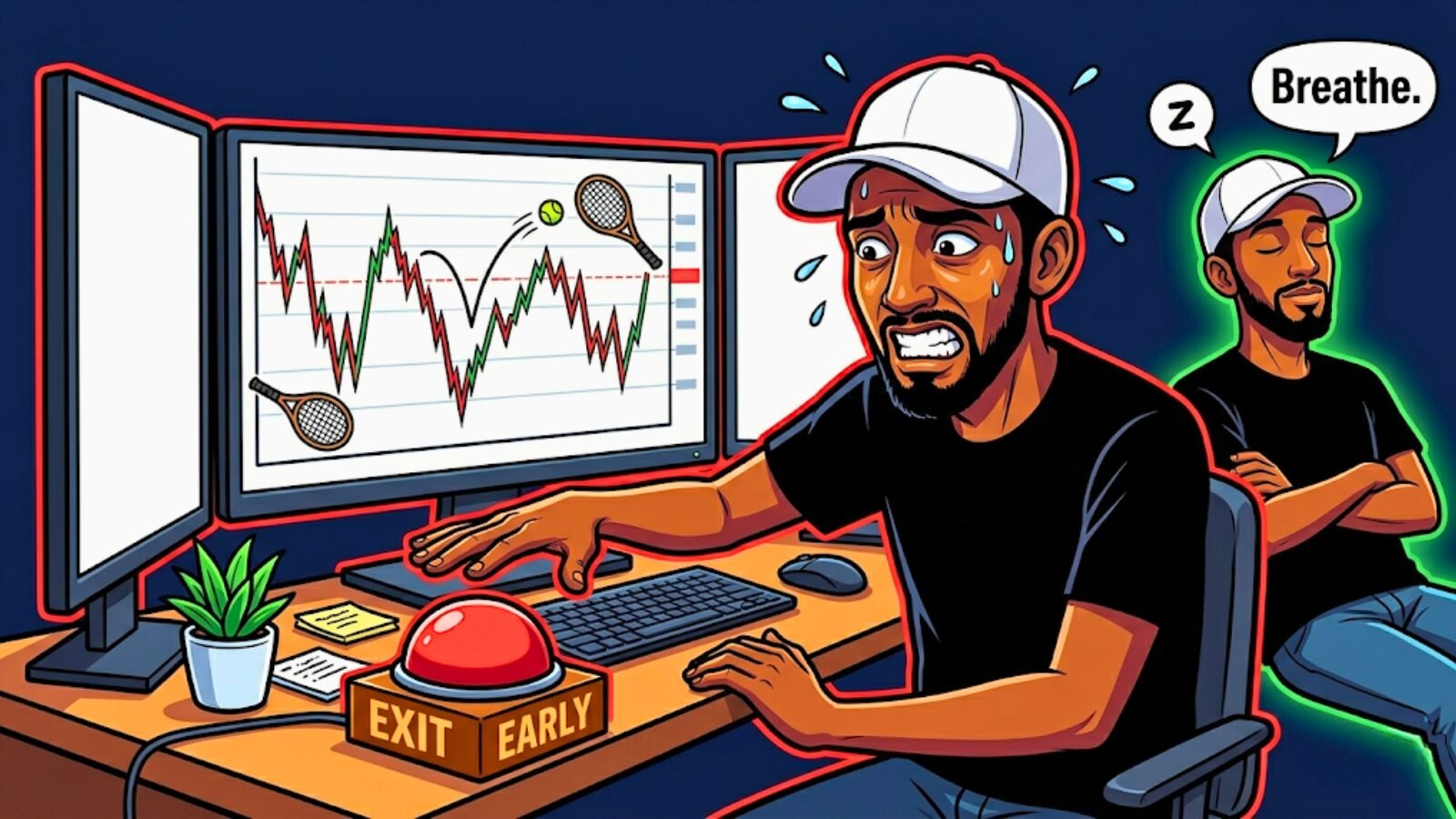
I know this feeling well. It’s that physiological response where the anxiety starts creeping in. The hands want to press the button. The mind starts rationalizing why maybe this one time it’s okay to act before the plan says to act. And that feeling multiplies significantly if you’re holding a position.

In those moments, the best thing I’ve found is to just focus on the breath. Not overthinking. Not analyzing. Not trying to predict what’s coming next. Just breathing. Slow, controlled breaths. Letting the body know that everything is okay and that flight or fight mode is not needed right now.

This connects directly to what I laid out in “Pull the Trigger” around managing the physiological responses to trading. The fear and anxiety that builds during live trading is not just mental. It shows up in the body. Increased heart rate, muscle tension, shallow breathing. And the fastest way to reset that is through the breath.

If the next step in the plan is clear, then all that’s needed is patience to wait for it. And if the next step isn’t clear, that’s not a signal to act anyway. That’s a signal that the plan needs more development. Either way, forcing action is almost never the answer. Preparation beats reaction every single time.

The Business Stays Open

At the end of the day, drawdown doesn’t mean the business is broken. It means the business is operating. Every business goes through seasons where the expenses outpace the revenue. That doesn’t mean the product is bad or the strategy is flawed. It means the conditions haven’t aligned yet. And the data is still being collected.

The traders who make it in this environment are not the ones who never experience drawdown. They’re the ones who can sit through it without abandoning their system. The ones who keep the language neutral. The ones who keep collecting data. The ones who make execution the reward instead of the dollar amount.

One thing I wrote in my session notes that keeps coming back to me: “Decision makes the trade long before the entry does.” The decision to follow the plan, to respect the risk, to keep the business running through the lean seasons. That decision is what makes all the difference.

So the doors stay open. The data keeps getting collected. The plan keeps getting followed. And the profit seasons? They’re ahead. They always come back around for the traders who are still here when they do.

Trade it easy ✌🏾

day-trading-while-traveling-with-a-macbook-pro-and-parallels

Trading on the Go: My Experience Using Sierra Chart with Parallels Software on a MacBook Pro

Trading is risky! Past performance does not guarantee future results. Click here to read our full Disclaimer

In the rapidly evolving world of trading, having a flexible setup is crucial, especially when you find yourself traveling frequently. As someone who actively trades, I’ve developed a system that allows me to efficiently trade while on the move. Here’s a look at how I maintain my trading activities using Sierra Chart with Parallels software on my MacBook Pro.

My Usual Trading Setup

At home, my trading gear includes an affordable HP Pavillion gaming laptop and two external monitors where I meticulously arrange my charts and programs for a custom trade copying system. This setup works perfectly; however, as life sometimes requires travel, carrying my entire workstation becomes impractical. That’s where Parallels Desktop comes into play.

Trading Setup for Traveling

When traveling, portability is key. Instead of lugging around my entire setup, I rely on my MacBook Pro. Although I generally use two monitors at home, I can comfortably manage trading with just one monitor when I’m away. The core of this setup relies on running Sierra Chart via Parallels software on my MacBook.

Why Parallels?

Parallels allows me to run Windows applications on my MacBook seamlessly. There are other virtualization options available, but Parallels is my preferred choice due to its reliability and performance, enabling me to trade efficiently without noticeable lag or system issues while away from my primary trading station.

save-on-paralells-desktop-coupon-deal
Sale ends October 20

Setting Up Parallels

In the video below, I walk through loading up Parallels, showcasing its startup time and functionality. It’s crucial to ensure all my trading settings, charts, and configurations from my desktop are mirrored onto my MacBook Pro for consistency. Using cloud storage services like Google Drive or iCloud to transfer these settings makes the process seamless.

Performance Insights

Running Sierra Chart on the MacBook Pro with the M1 chip through Parallels is extraordinarily efficient. I’ve experienced no significant issues except for a minor lag during the initial startup phase, which quickly resolves as the software stabilizes. To maximize performance, I ensure all unnecessary applications are closed, allowing resources to be dedicated to trading operations. As shown in the video, even with programs like OBS and Discord running in the background, the setup operates smoothly.

Key Considerations and Tips

While Sierra Chart hasn’t released a macOS version yet, using Parallels to run it on a MacBook Pro provides a viable alternative. When setting up, ensure that Sierra Chart’s settings and application version match your primary setup to avoid any technical hiccups. The most efficient practice I’ve found for daily trading on Parallels is to either pause or suspend Parallels at the end of each trading session. This makes it easy to pick up where I left off without the need for lengthy reload processes.

Conclusion

Traveling doesn’t mean halting trading operations, especially with reliable tools like Parallels software and a robust device like a 2020 MacBook Pro. For a more in-depth look and visual walkthrough of my setup, check out the video at the top of this post. You’ll find demonstrations of my setup in action and additional tips that may enhance your mobile trading experience.

If you have questions or need further details, feel free to leave a comment. Until next time, trade easily and efficiently.